Metric vs Imperial Units: What's the Difference? A Complete Comparison Guide
Have you ever been confused by a recipe calling for cups and ounces when you only have a kitchen scale that measures grams? Or wondered why speed limits are in miles per hour in the US but kilometers per hour almost everywhere else?
You've encountered one of the most fundamental divides in measurement: Metric vs Imperial.
In this comprehensive guide, we'll explain everything you need to know about these two measurement systems: their history, key differences, conversion formulas, real-world applications, and why the world hasn't settled on just one system.
Quick conversion tool: Use our free unit converter here
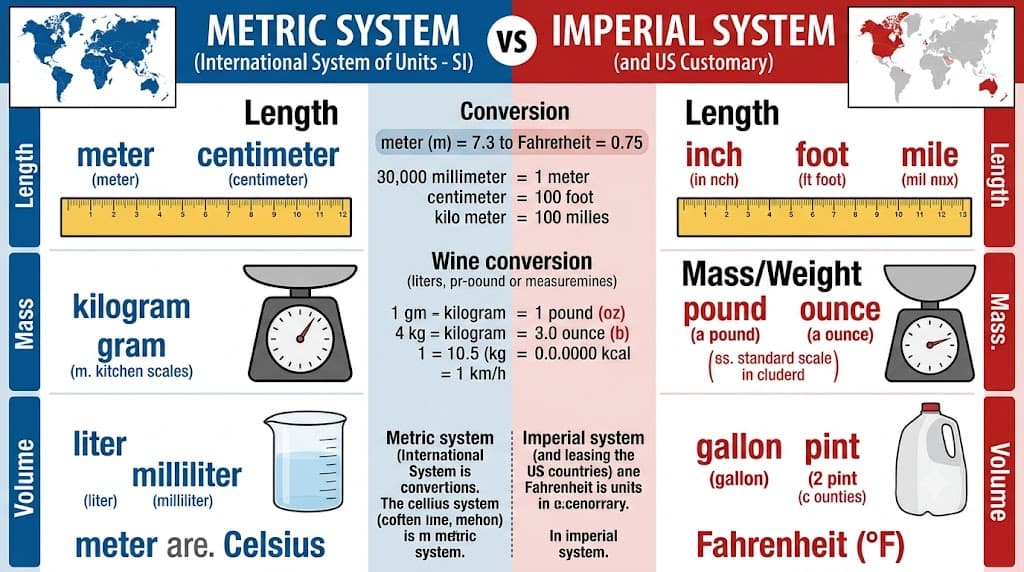
What Are the Two Systems?
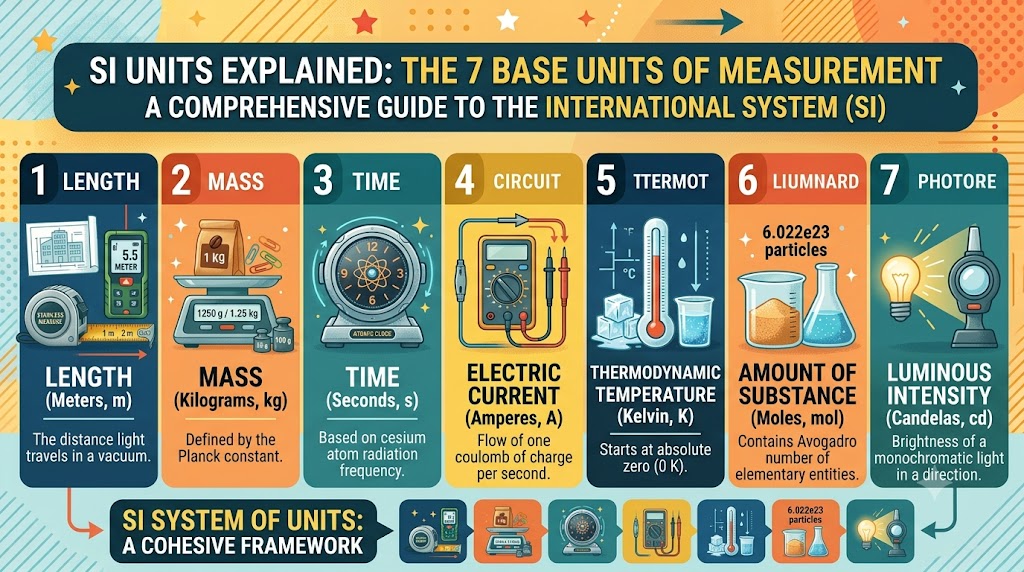
The Metric System (SI)
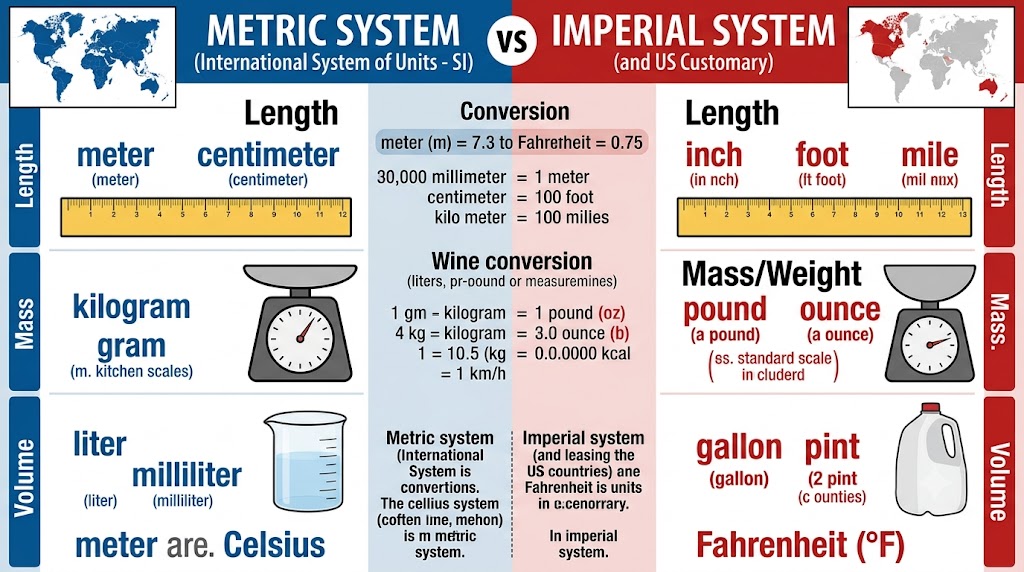
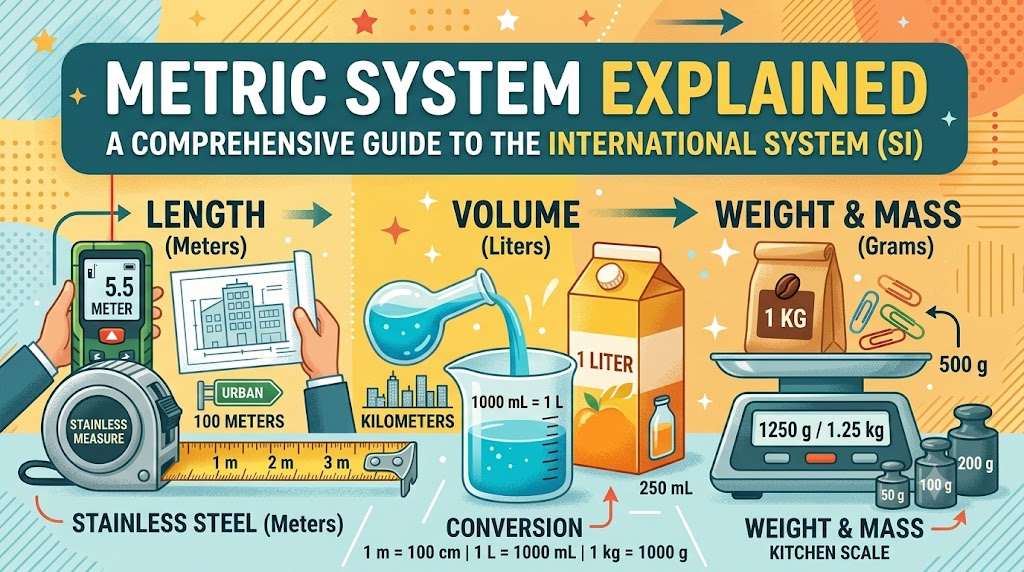
The Metric System — officially called the International System of Units (SI) — is a decimal-based system of measurement used by virtually every country in the world except the United States, Liberia, and Myanmar.
Key Features:
- Based on powers of 10 (decimal system)
- Uses standardized prefixes (kilo-, centi-, milli-, etc.)
- Scientifically precise and consistent
- Globally adopted for science, medicine, and industry
Base Units:
- Length: Meter (m)
- Mass: Kilogram (kg)
- Time: Second (s)
- Temperature: Kelvin (K) — Celsius (°C) used for everyday
- Volume: Liter (L)
The Imperial System (US Customary)
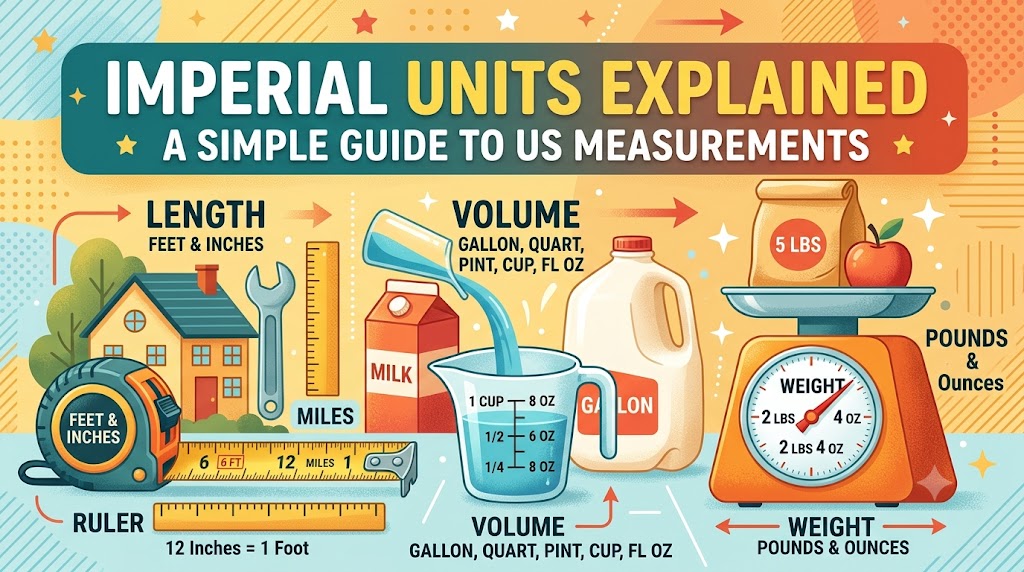
The Imperial System — known as US Customary Units in the United States — is a system based on historical English units. It's used primarily in the US, with some residual use in the UK, Canada, and other former British colonies.
Key Features:
- Based on historical, non-decimal relationships
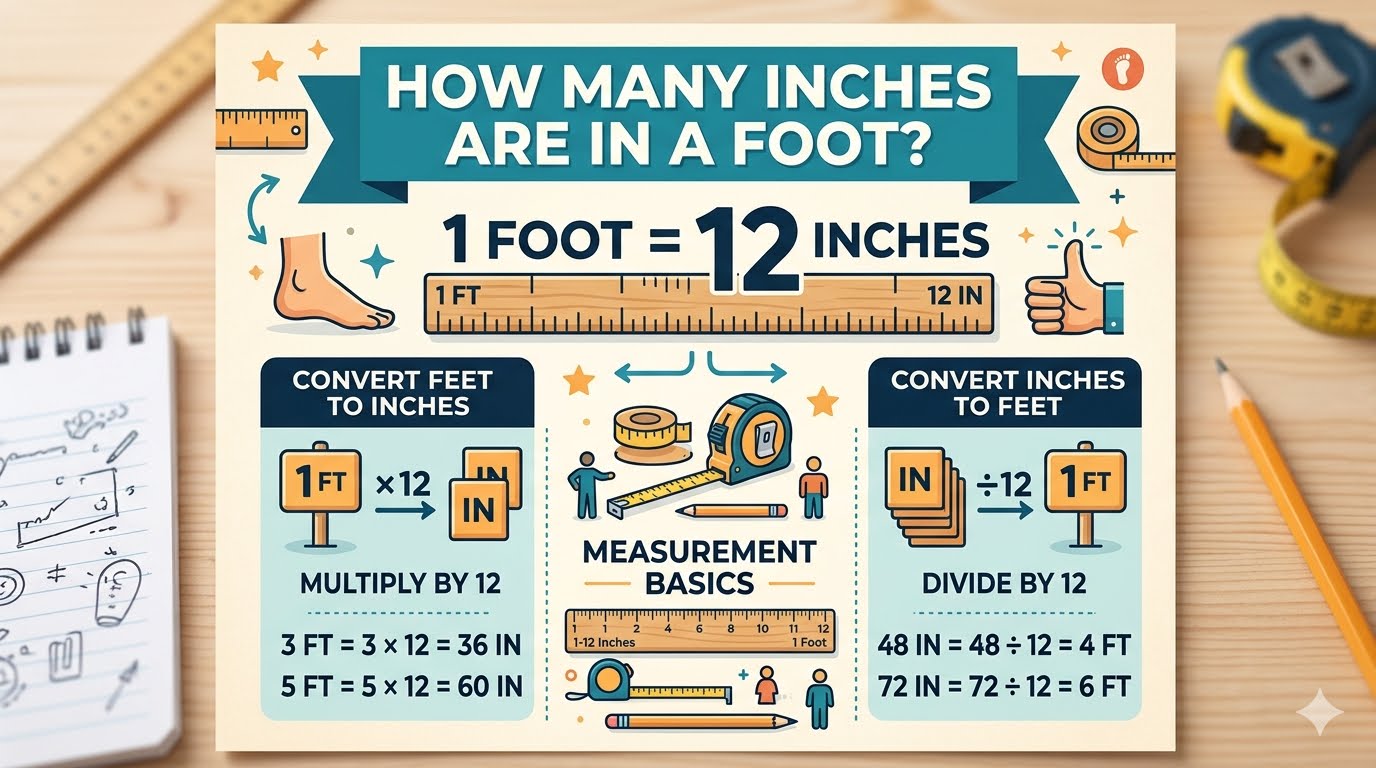
- Uses varying conversion factors (12 inches in a foot, 3 feet in a yard, 5280 feet in a mile)
- Rooted in everyday, practical measurements
- Intuitive for human-scale activities
Common Units:
- Length: Inch, foot, yard, mile
- Mass: Ounce, pound, ton
- Temperature: Fahrenheit (°F)
- Volume: Fluid ounce, cup, pint, quart, gallon
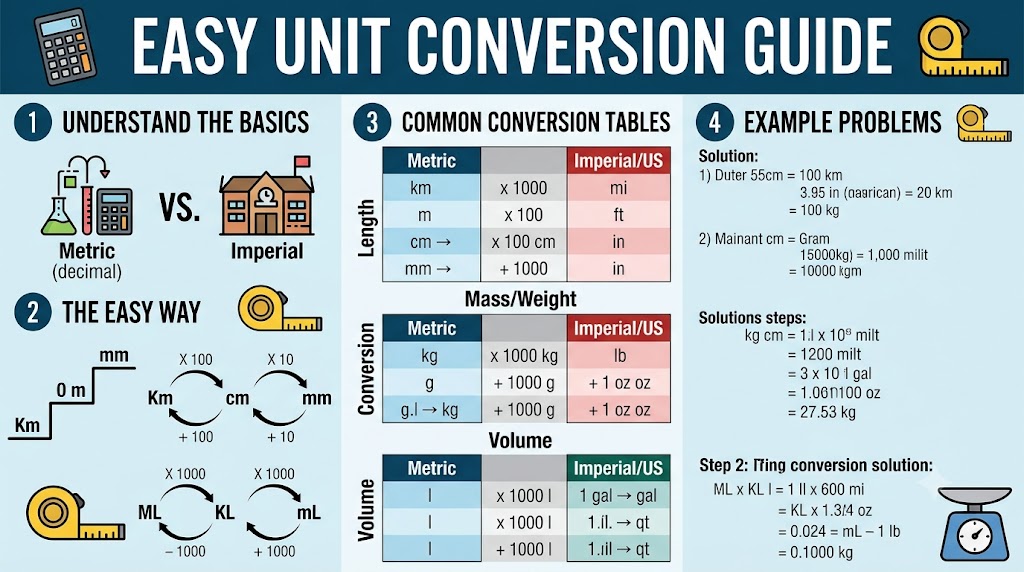
Side-by-Side Comparison
| Category | Metric Unit | Imperial Unit | Conversion Factor |
|---|---|---|---|
| Length | 1 kilometer (km) | 0.621 mile | 1 km ≈ 0.621 mi |
| 1 meter (m) | 3.281 feet | 1 m ≈ 3.281 ft | |
| 1 centimeter (cm) | 0.394 inches | 1 cm ≈ 0.394 in | |
| 1 millimeter (mm) | 0.039 inches | 1 mm ≈ 0.039 in | |
| Mass/Weight | 1 kilogram (kg) | 2.205 pounds | 1 kg ≈ 2.205 lb |
| 1 gram (g) | 0.035 ounces | 1 g ≈ 0.035 oz | |
| Volume | 1 liter (L) | 0.264 US gallons | 1 L ≈ 0.264 gal |
| 1 liter (L) | 1.057 US quarts | 1 L ≈ 1.057 qt | |
| 1 milliliter (mL) | 0.034 fluid ounces | 1 mL ≈ 0.034 fl oz | |
| Temperature | 0°C | 32°F | Freezing point |
| 100°C | 212°F | Boiling point |
Key Differences Explained
1. Foundation: Decimal vs. Historical
Metric: Everything is based on powers of 10.
- 1 meter = 100 centimeters = 1,000 millimeters
- 1 kilogram = 1,000 grams = 1,000,000 milligrams
- 1 liter = 1,000 milliliters
Imperial: Conversion factors are arbitrary historical values.
- 1 mile = 1,760 yards = 5,280 feet = 63,360 inches
- 1 pound = 16 ounces
- 1 gallon = 4 quarts = 8 pints = 16 cups = 128 fluid ounces
2. Global Adoption
| Region | Primary System |
|---|---|
| Most of the world (over 190 countries) | Metric |
| United States | Imperial (US Customary) |
| Liberia | Imperial |
| Myanmar | Imperial |
3. Scientific Use
Metric is the standard in all scientific fields worldwide. Even the US uses metric for:
- Medical dosages
- Scientific research
- Engineering specifications
- Nutrition labeling (grams, milligrams)
- International trade
4. Everyday Life
Imperial remains dominant in US everyday life:
- Road signs (miles, mph)
- Weather (Fahrenheit)
- Cooking recipes (cups, tablespoons)
- Construction (feet, inches)
- Grocery shopping (pounds, ounces)
- Automotive (mpg)
Temperature: Celsius vs Fahrenheit
The most noticeable difference in daily life is temperature.
| Celsius (°C) | Fahrenheit (°F) | |
|---|---|---|
| Water freezes | 0°C | 32°F |
| Water boils | 100°C | 212°F |
| Room temperature | ~20-22°C | ~68-72°F |
| Body temperature | 37°C | 98.6°F |
| Cold winter day | -10°C | 14°F |
| Hot summer day | 35°C | 95°F |
Temperature Conversion Formulas
Celsius to Fahrenheit: °F = (°C × 9/5) + 32
Fahrenheit to Celsius: °C = (°F − 32) × 5/9
Quick Memory Tricks:
- 0°C = 32°F (freezing point)
- 10°C ≈ 50°F
- 20°C ≈ 68°F
- 30°C ≈ 86°F
- 40°C = 104°F
- Double it and add 30 for a rough °C → °F estimate (10°C × 2 + 30 = 50°F – close to 50°F)
Length: Meters vs Feet/Inches
Common Reference Points
| Measurement | Metric | Imperial |
|---|---|---|
| A person's height | ~1.75 m | ~5 ft 9 in |
| A door height | ~2.0 m | ~6 ft 7 in |
| A marathon | 42.195 km | 26.2 miles |
| A football field | 91.44 m | 100 yards |
| A piece of paper | 21 cm × 29.7 cm | 8.5 in × 11 in |
| A car | ~4.5 m long | ~15 ft long |
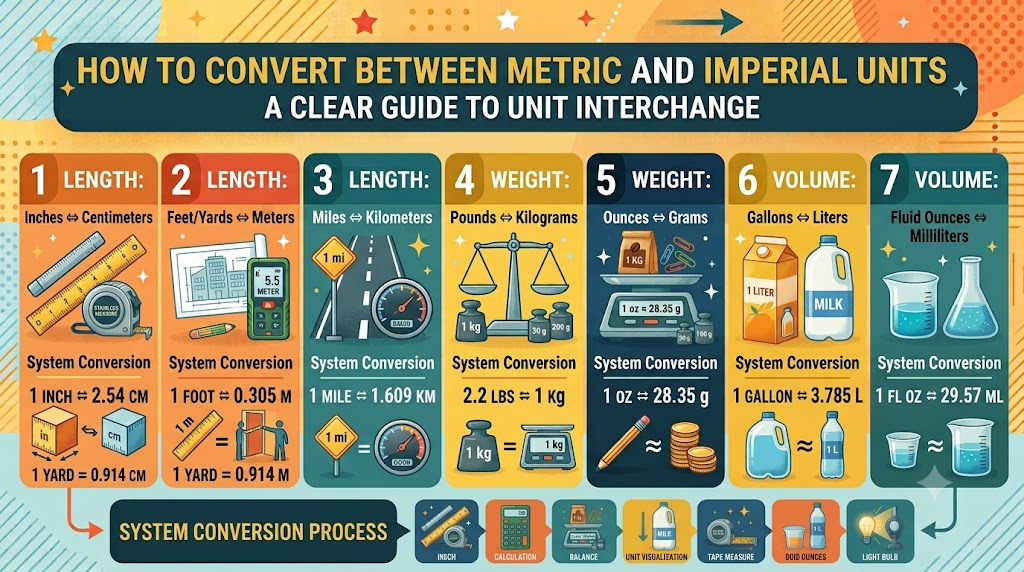
Key Conversions
| From | To | Calculation |
|---|---|---|
| Inches to cm | cm = in × 2.54 | 1 in = 2.54 cm |
| Feet to meters | m = ft × 0.3048 | 1 ft = 0.3048 m |
| Miles to km | km = mi × 1.609 | 1 mi = 1.609 km |
| cm to inches | in = cm / 2.54 | 1 cm = 0.394 in |
| Meters to feet | ft = m × 3.281 | 1 m = 3.281 ft |
| km to miles | mi = km / 1.609 | 1 km = 0.621 mi |
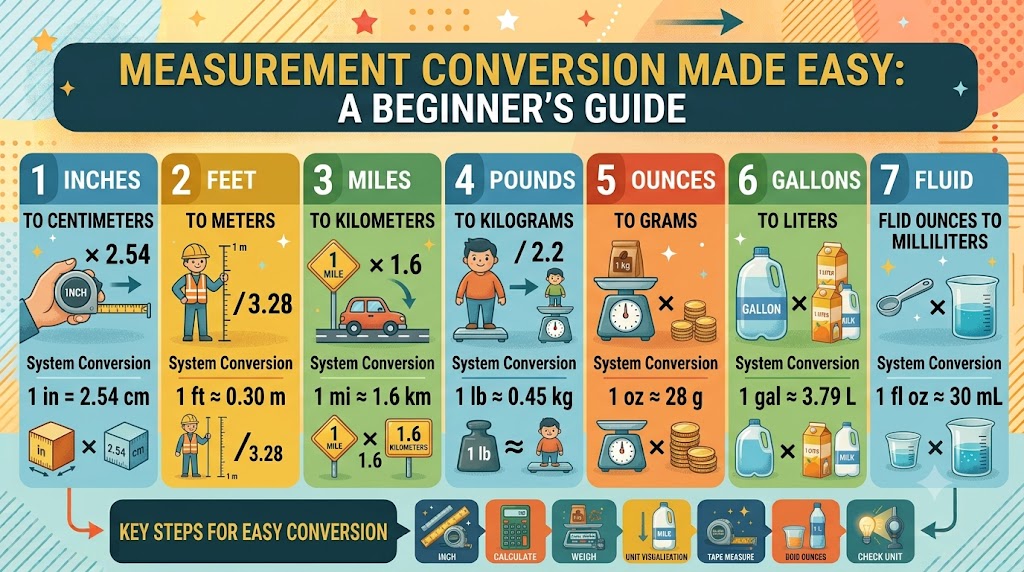
Quick Estimates
- 1 meter ≈ 3.3 feet (or 1 yard + 3 inches)
- 1 mile ≈ 1.6 km (or 5 miles ≈ 8 km)
- 1 inch ≈ 2.5 cm (or 4 inches ≈ 10 cm)
Weight: Kilograms vs Pounds
Common Reference Points
| Object | Metric | Imperial |
|---|---|---|
| Average adult weight | ~70 kg | ~154 lb |
| A bag of sugar | 1 kg | 2.2 lb |
| A car | ~1,500 kg | ~3,300 lb |
| A gallon of water | 3.785 L | 8.34 lb |
| An average apple | ~150 g | ~5.3 oz |
Key Conversions
| From | To | Calculation |
|---|---|---|
| Pounds to kg | kg = lb / 2.205 | 1 lb = 0.454 kg |
| kg to pounds | lb = kg × 2.205 | 1 kg = 2.205 lb |
| Ounces to grams | g = oz × 28.35 | 1 oz = 28.35 g |
| Grams to ounces | oz = g / 28.35 | 1 g = 0.035 oz |
Quick Estimates
- 1 kg ≈ 2.2 lb (or roughly double pounds for kilograms)
- 1 lb ≈ 0.45 kg (or roughly half kilograms for pounds)
- 1 oz ≈ 28 g (or 1 oz ≈ 30 g for quick estimates)
Volume: Liters vs Gallons
Common Reference Points
| Object | Metric | Imperial |
|---|---|---|
| A cup of coffee | 240 mL | 8 fl oz |
| A soda can | 355 mL | 12 fl oz |
| A gallon of milk | 3.785 L | 1 US gal |
| A car's fuel tank | 60 L | 15.85 gal |
| A swimming pool | 500,000 L | 132,000 gal |
Key Conversions
| From | To | Calculation |
|---|---|---|
| US gallons to liters | L = gal × 3.785 | 1 US gal = 3.785 L |
| Liters to US gallons | gal = L / 3.785 | 1 L = 0.264 US gal |
| UK gallons to liters | L = gal × 4.546 | 1 UK gal = 4.546 L |
| Fluid ounces to mL | mL = fl oz × 29.574 | 1 fl oz = 29.574 mL |
| Cups to mL | mL = cups × 236.6 | 1 cup = 236.6 mL |
Quick Estimates
- 1 US gallon ≈ 3.8 L (or 4 L for quick estimates)
- 1 L ≈ 0.26 US gal (or roughly 1/4 gallon)
- 1 cup ≈ 240 mL
- 1 fl oz ≈ 30 mL
Volume: US vs UK Gallons (Important Distinction!)
Many people don't realize that US and UK gallons are different:
| US Gallon | UK (Imperial) Gallon | |
|---|---|---|
| Liters | 3.785 L | 4.546 L |
| Difference | Smaller | About 20% larger |
| Fluid ounces | 128 fl oz | 160 fl oz |
This difference affects:
- Fuel efficiency (mpg in US vs UK)
- Car fuel tank capacity
- Recipe conversions
- International trade
Example:
- A car advertised with 30 mpg in the US gets 30 miles per 3.785 L
- In the UK, 30 mpg means 30 miles per 4.546 L (better fuel efficiency)
Real-World Scenarios: When You Need Both Systems
1. International Travel
- US to Europe: Speed signs in km/h (130 km/h ≈ 81 mph)
- European to US: Weather in °F (25°C ≈ 77°F)
- Gas station: Liters vs gallons
Example: You're driving in France and see a speed limit of 130 km/h. How fast is that in mph?
130 × 0.621 = 80.7 mph → About 81 mph
2. Cooking and Baking
- US recipe: 2 cups flour, 1 cup milk, 1 tsp salt
- European recipe: 250g flour, 200mL milk, 5g salt
Example: You find a great Italian recipe online that calls for 300g of pasta. Your kitchen scale measures in ounces.
300 × 0.035 = 10.6 oz → About 10.6 oz
3. Science and Medicine
- Medication doses: Always in metric (mg, mL)
- Lab experiments: Strictly metric
- Nutrition labels: Often show both (g and oz)
4. Purchasing Property
- US real estate: Square feet
- European real estate: Square meters
Example: An apartment is listed as 1,200 sq ft. How many square meters?
1,200 × 0.0929 = 111.5 m²
5. Online Shopping
- Product dimensions: May show inches or cm
- Weight: May show pounds or kg
- Currency: Always check the units!
Pros and Cons of Each System
Metric System
Pros: ✅ Decimal-based — easy calculations (multiply/divide by 10, 100, 1000) ✅ Consistent prefixes (kilo-, centi-, milli-) ✅ Globally standardized ✅ Used in all scientific fields ✅ No confusion between units (e.g., no US vs UK gallons)
Cons: ❌ Less intuitive for everyday human-scale measurements ❌ Requires learning for people used to Imperial ❌ Harder to visualize (what does 20°C feel like?)
Imperial System
Pros: ✅ Intuitive for human-scale use (foot, inch, pound) ✅ Established in US culture and infrastructure ✅ Many people already know it
Cons: ❌ Inconsistent conversion factors (12 inches in a foot, 3 feet in a yard, 1,760 yards in a mile) ❌ Not decimal-based — harder math ❌ Confusion between US and UK units (gallons, tons) ❌ Not used internationally ❌ Scientifically imprecise
Why Does the US Still Use Imperial?
The United States officially adopted the metric system in 1866, but it never fully transitioned. Why?
1. Cost of Conversion
- Updating all road signs, packaging, manufacturing equipment, and education materials would cost billions of dollars
- The US is simply too large and established to change easily
2. Cultural Resistance
- Americans are familiar and comfortable with Imperial units
- Changing would require retraining an entire population
3. Piecemeal Adoption
- US actually uses metric in many areas: science, medicine, military, manufacturing
- It's a hybrid system — metric where it matters, Imperial where it's familiar
4. Lack of Mandate
- Unlike other countries, the US has never mandated a complete transition
- Voluntary adoption hasn't been sufficient
Countries That Use Imperial
| Country | Primary System | Notes |
|---|---|---|
| United States | Imperial (US Customary) | Uses metric for science, medicine |
| Liberia | Imperial | Officially, but some metric used |
| Myanmar | Imperial | Transitioning to metric slowly |
Countries with Mixed Systems
| Country | Details |
|---|---|
| United Kingdom | Metric officially, but Imperial in everyday life (miles, pints, stones) |
| Canada | Metric officially, but Imperial in everyday life (feet/inches, pounds, temperature) |
| Australia | Metric, but older generation uses Imperial |
| India | Metric, but Imperial for some traditional uses |
Quick Reference Conversion Tables
Length Conversion Quick Reference
| You Know This | Convert to This | Multiply By |
|---|---|---|
| inches | centimeters | 2.54 |
| feet | meters | 0.3048 |
| yards | meters | 0.9144 |
| miles | kilometers | 1.60934 |
| centimeters | inches | 0.393701 |
| meters | feet | 3.28084 |
| meters | yards | 1.09361 |
| kilometers | miles | 0.621371 |
Weight Conversion Quick Reference
| You Know This | Convert to This | Multiply By |
|---|---|---|
| ounces | grams | 28.3495 |
| pounds | kilograms | 0.453592 |
| tons (US) | kilograms | 907.185 |
| grams | ounces | 0.035274 |
| kilograms | pounds | 2.20462 |
| kilograms | tons (US) | 0.001102 |
Volume Conversion Quick Reference
| You Know This | Convert to This | Multiply By |
|---|---|---|
| US gallons | liters | 3.78541 |
| UK gallons | liters | 4.54609 |
| quarts | liters | 0.946353 |
| pints | liters | 0.473176 |
| cups | liters | 0.236588 |
| fluid ounces | milliliters | 29.5735 |
| liters | US gallons | 0.264172 |
| liters | UK gallons | 0.219969 |
Common Mistakes to Avoid
1. Confusing US and UK Gallons
Mistake: Using 3.785 L for a UK gallon.
Correct: US gallon = 3.785 L, UK gallon = 4.546 L.
2. Forgetting Temperature Formulas
Mistake: Applying a simple multiplication factor like other conversions.
Correct: Use the proper formulas.
3. Mixing Up Weight and Mass
In everyday use, we treat them the same, but technically:
- Mass is the amount of matter (kg, lb)
- Weight is the force of gravity on that mass
On Earth, they're essentially the same for practical purposes.
4. Using Imperial for Scientific Work
Mistake: Using pounds, feet, or Fahrenheit in science.
Correct: Always use metric in scientific contexts.
Which System Is Better?
For Everyday Life → Imperial (in the US)
- It's what you grew up with
- All your friends and family use it
- Everything around you is measured in it
For Everything Else → Metric
- Easier math (decimal-based)
- Used by the entire world
- Standard for science and medicine
- No confusing US vs UK variations
The Bottom Line
Both systems have their place. The imperial system is deeply embedded in US culture and infrastructure, while the metric system is the global standard for science, industry, and international communication.
The best approach: Learn both. Be comfortable with both. Know how to convert between them. In our globalized world, you need both skills.
How Our Unit Converter Helps
Our free unit converter handles all these conversions automatically:
- Length: inches ↔ cm, feet ↔ meters, miles ↔ km
- Weight: pounds ↔ kg, ounces ↔ grams
- Volume: gallons ↔ liters, cups ↔ mL
- Temperature: °F ↔ °C
- Area: sq ft ↔ sq meters, acres ↔ hectares
- Speed: mph ↔ km/h
- Pressure: PSI ↔ kPa
- Energy: calories ↔ joules, BTU ↔ joules
Instant, accurate, and free: Try our unit converter now
Frequently Asked Questions
Q: What is the difference between metric and imperial?
Metric is a decimal-based system used by most countries. Imperial is a historical system used primarily in the US with inconsistent conversion factors.
Q: Why does the US use imperial instead of metric?
Historical and economic reasons. The US is too large to convert easily, and there's cultural resistance. It was never mandated.
Q: Which is better: metric or imperial?
For science and math, metric is better (decimal-based). For everyday US life, imperial is more familiar. Both have their place.
Q: How do I convert metric to imperial?
Use conversion factors: multiply by the appropriate factor. For example, kg × 2.205 = pounds.
Q: Is the UK metric or imperial?
Officially metric, but they still use miles, pints, and stones in everyday life. It's a mixed system.
Q: What countries use imperial?
United States, Liberia, and Myanmar. The UK and Canada use a mix.
Q: What is the difference between US and UK gallons?
US gallon = 3.785 L, UK gallon = 4.546 L. UK gallon is about 20% larger.
Q: Why is Celsius better than Fahrenheit?
Celsius is based on water freezing (0°C) and boiling (100°C), making it more logical and easier to use in science.
Q: How do I convert between °C and °F?
°F = (°C × 9/5) + 32. °C = (°F − 32) × 5/9.
Q: Will the US ever switch to metric?
Unlikely. The cost is too high and there's no political will. The US will likely remain a hybrid system.
Final Thoughts
Understanding both metric and imperial systems is an essential skill in our interconnected world. Whether you're traveling abroad, cooking an international recipe, studying science, or simply trying to understand a product label, knowing how to convert between systems will serve you well.
Remember:
- Metric is decimal-based, scientific, and global
- Imperial is historical, human-scale, and US-based
- Both are valid and useful in different contexts
- The best approach is to learn both and use a unit converter when needed
Key takeaway: The world runs on metric, but the US runs on imperial. Be bilingual in measurement systems — it's easier than you think!
Convert any unit instantly with our free tool
Tags: metric vs imperial, metric system, imperial system, measurement systems, unit conversion, metric units, imperial units, SI units, US customary units, length conversion, weight conversion, temperature conversion, metric vs imperial guide, measurement comparison, unit system differences, conversion guide, why US uses imperial, metric system vs imperial system, difference between metric and imperial, which measurement system is better, how to convert metric to imperial, imperial to metric conversion, measurement standards, international system of units