How to Convert Units Easily: A Complete Conversion Guide
Have you ever stared at a measurement in kilometers and wished you knew how many miles that was? Or looked at a recipe in grams when your scale only measures ounces? Unit conversion is a skill we all need — whether for travel, cooking, school, work, or everyday life.
But here's the good news: converting units is not hard. Once you understand the basic principles and a few simple methods, you can convert any unit to any other unit with confidence and accuracy.
In this complete guide, you'll learn:
- ✅ The simple logic behind all unit conversions
- ✅ The foolproof dimensional analysis method
- ✅ Step-by-step examples for length, weight, temperature, volume, and speed
- ✅ Pro tips and common mistakes to avoid
- ✅ Mental math shortcuts for quick estimates
Try it now: Use our free unit converter here
What Is Unit Conversion?
Unit conversion is the process of changing a quantity from one unit of measurement to another without changing its actual physical value.
The Key Principle
The number changes, but the physical quantity stays the same.
| Example | Same Amount, Different Units |
|---|---|
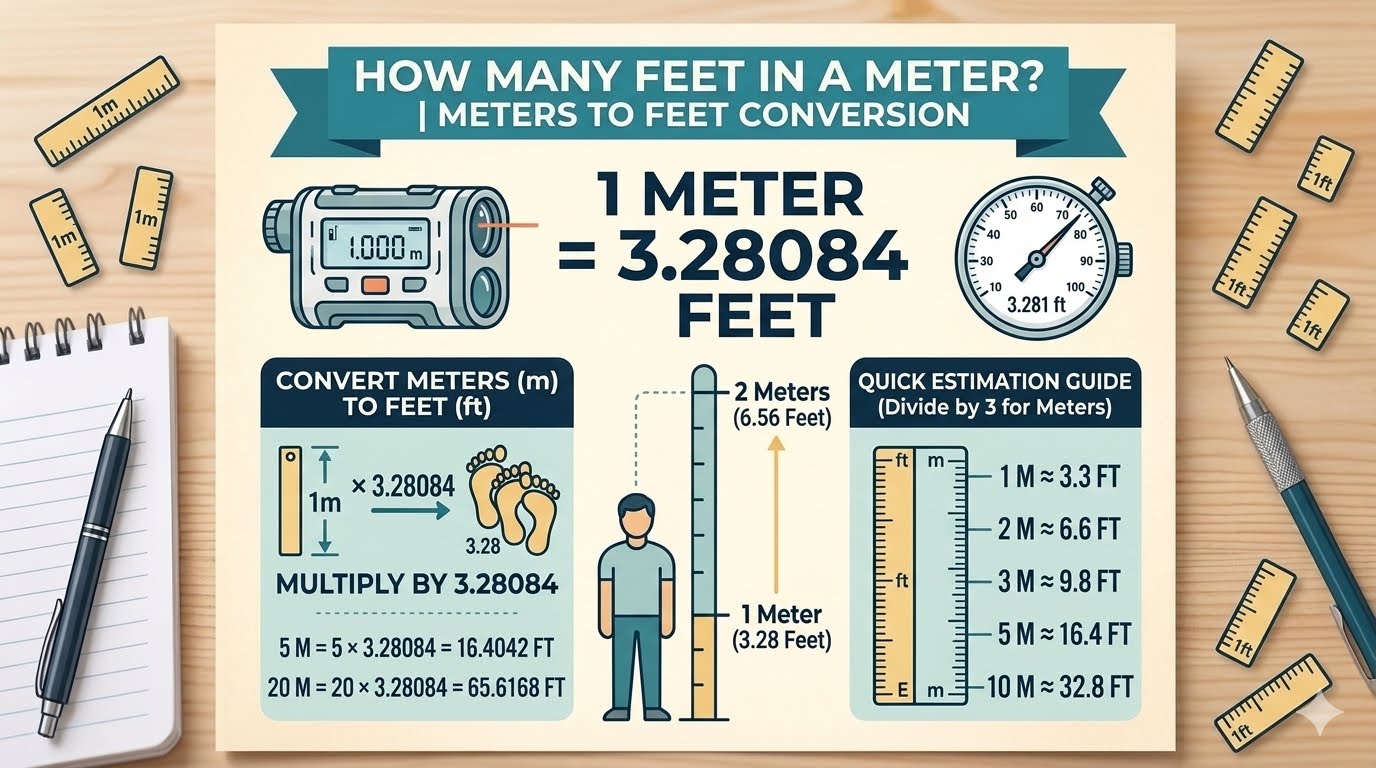
| 1 meter | = 3.28084 feet |
| 1 kilogram | = 2.20462 pounds |
| 1 liter | = 0.264172 gallons |
| 0°C | = 32°F |
The Golden Rule of Unit Conversion
Any conversion factor equals 1.
For example:
- 1 meter = 100 centimeters →
100 cm / 1 m = 1 - 1 hour = 60 minutes →
60 min / 1 hr = 1 - 1 mile = 1.609 kilometers →
1.609 km / 1 mi = 1
When you multiply a number by 1, it doesn't change its value — it only changes its units. This is the foundation of all unit conversion.
The 3-Step Method for Any Conversion
Step 1: Identify What You Have
Write down the value you want to convert, including its unit.
Example: 10 miles
Step 2: Find the Conversion Factor
Look up the relationship between the unit you have and the unit you want.
Example: 1 mile = 1.60934 kilometers
Step 3: Multiply and Cancel Units
Set up the conversion so that the unwanted units cancel out, leaving you with the desired units.
Example:
10 miles × (1.60934 km / 1 mile) = 16.0934 km
That's it! You've just converted 10 miles to kilometers.
The Foolproof Method: Dimensional Analysis
Dimensional analysis (also called the factor-label method) is the most reliable way to convert units. It treats units like algebraic variables — you multiply, divide, and cancel them.
How It Works
- Write your starting value as a fraction
- Multiply by conversion factors (fractions that equal 1)
- Cancel units that appear in both the numerator and denominator
- The remaining units are your answer
Multi-Step Example: 100 km/h to m/s
Problem: Convert 100 kilometers per hour to meters per second.
Step 1: Write as a fraction
100 km / 1 h
Step 2: Convert km to m
100 km / 1 h × (1000 m / 1 km)
Step 3: Convert h to s
100 km / 1 h × (1000 m / 1 km) × (1 h / 3600 s)
Step 4: Cancel units
100 × 1000 × 1 / (1 × 1 × 3600) m/s
Step 5: Calculate
100,000 / 3600 = 27.78 m/s
Answer: 100 km/h = 27.78 m/s
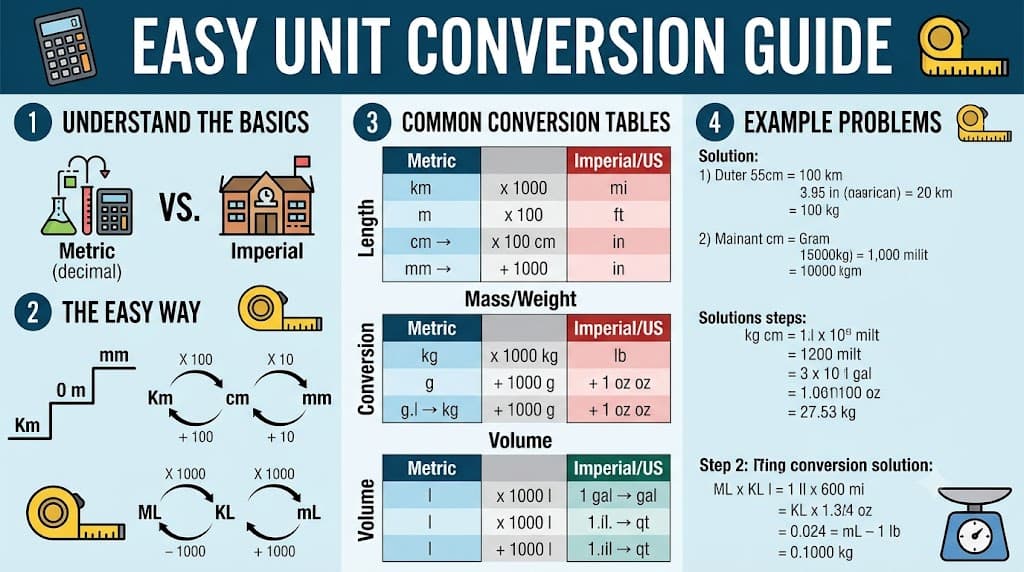
Common Conversion Factors Reference
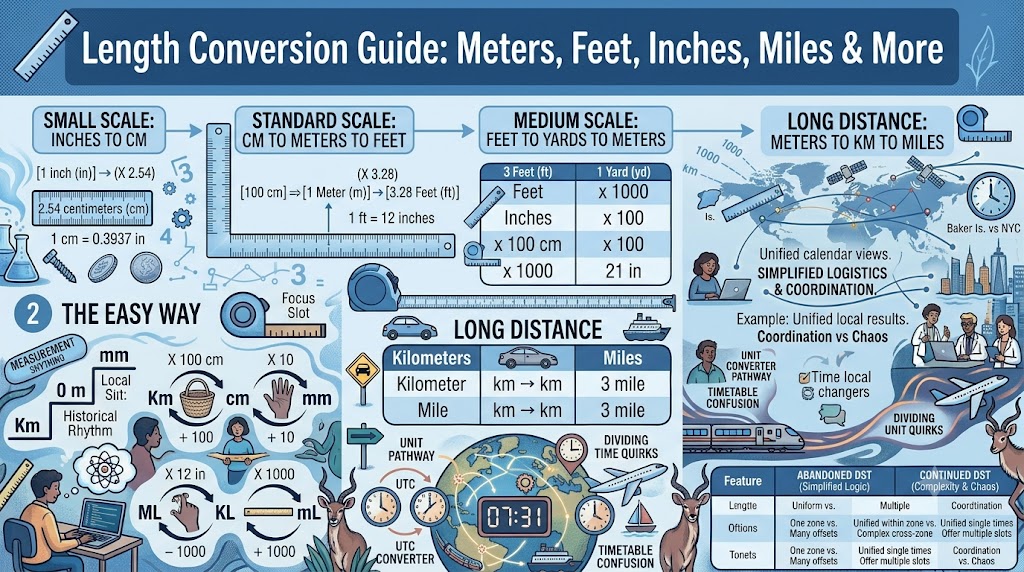
Length Conversions
| Unit | Equivalent |
|---|---|
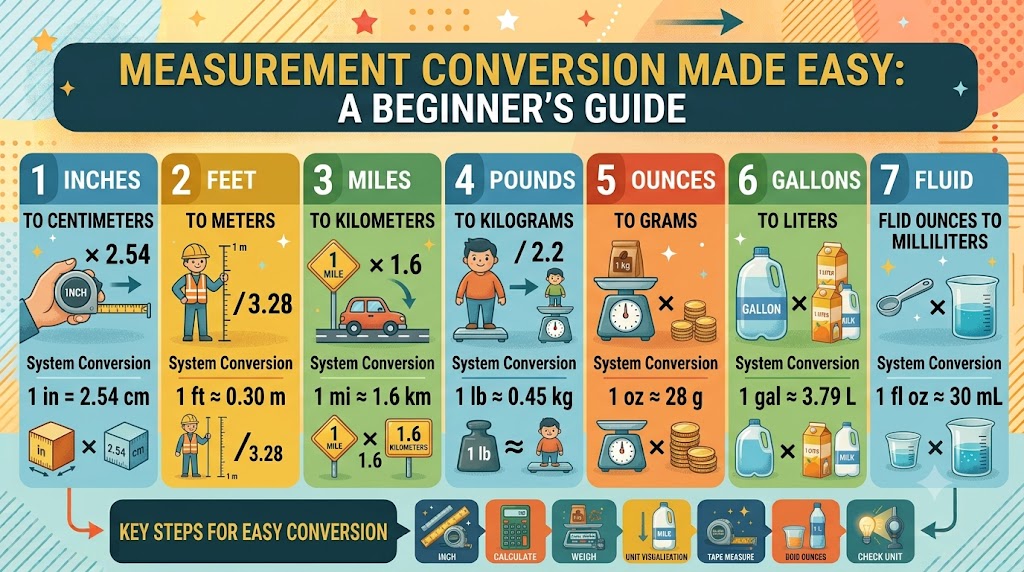
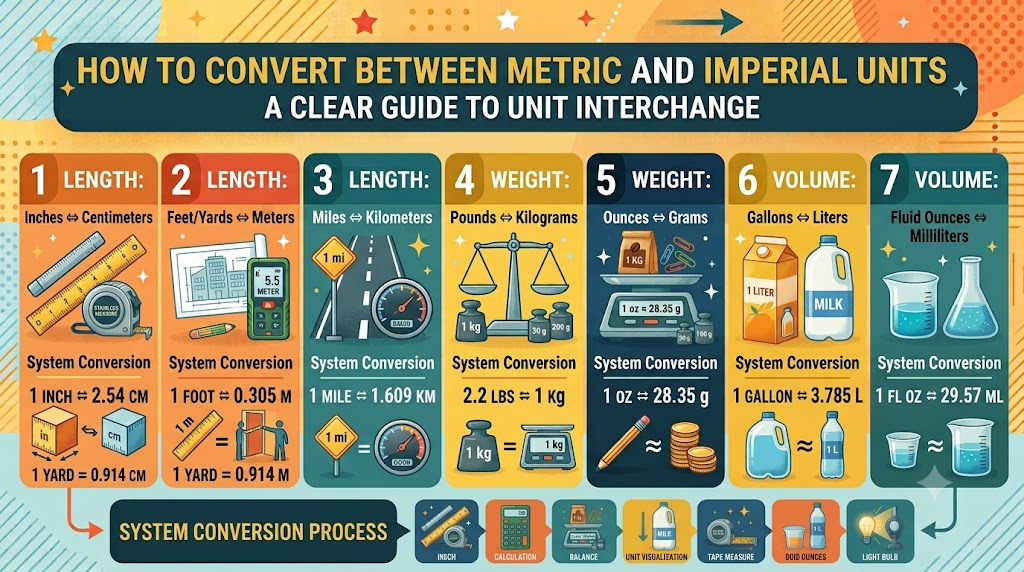
| 1 inch (in) | 2.54 centimeters (cm) |
| 1 foot (ft) | 0.3048 meters (m) |
| 1 yard (yd) | 0.9144 meters (m) |
| 1 mile (mi) | 1.60934 kilometers (km) |
| 1 centimeter (cm) | 0.393701 inches (in) |
| 1 meter (m) | 3.28084 feet (ft) |
| 1 kilometer (km) | 0.621371 miles (mi) |
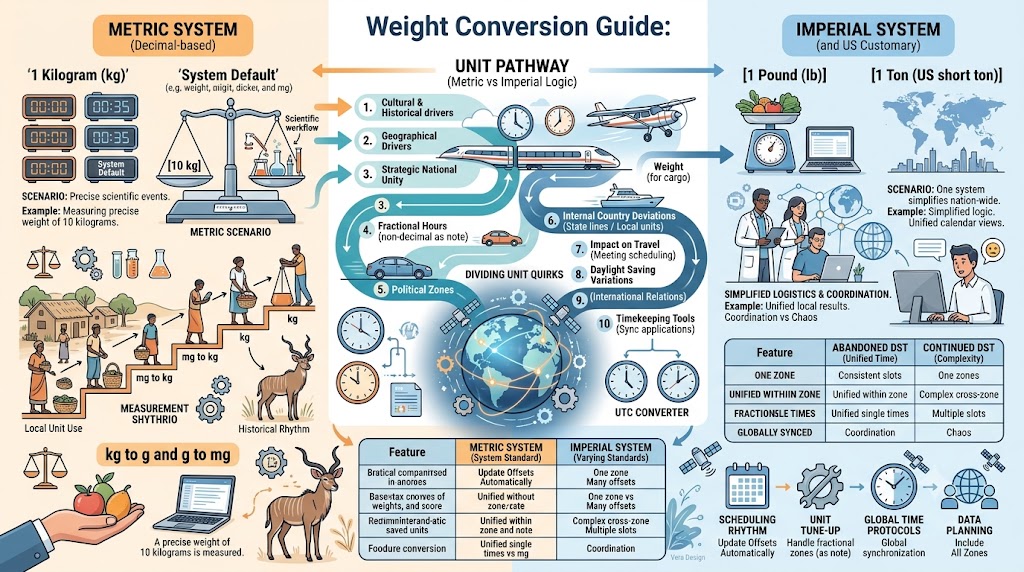
Weight / Mass Conversions
| Unit | Equivalent |
|---|---|
| 1 ounce (oz) | 28.3495 grams (g) |
| 1 pound (lb) | 0.453592 kilograms (kg) |
| 1 stone (st) | 6.35029 kilograms (kg) |
| 1 short ton (T) | 907.185 kilograms (kg) |
| 1 metric ton (t) | 1,000 kilograms (kg) |
| 1 gram (g) | 0.035274 ounces (oz) |
| 1 kilogram (kg) | 2.20462 pounds (lb) |
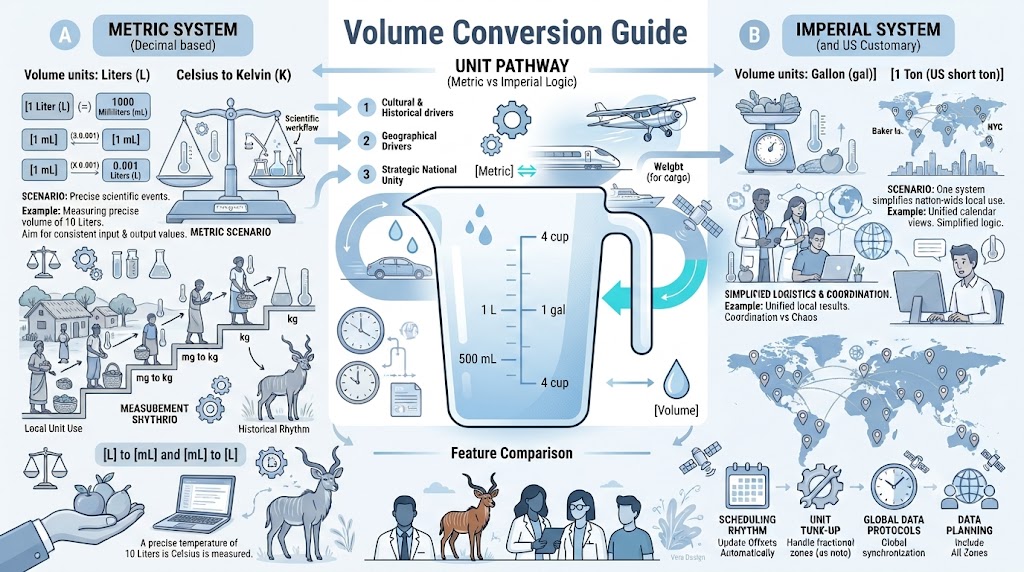
Volume Conversions
| Unit | Equivalent |
|---|---|
| 1 US gallon (gal) | 3.78541 liters (L) |
| 1 UK gallon (gal) | 4.54609 liters (L) |
| 1 US quart (qt) | 0.946353 liters (L) |
| 1 US pint (pt) | 0.473176 liters (L) |
| 1 US cup (cup) | 0.236588 liters (L) |
| 1 US fluid ounce (fl oz) | 29.5735 milliliters (mL) |
| 1 liter (L) | 0.264172 US gallons (gal) |
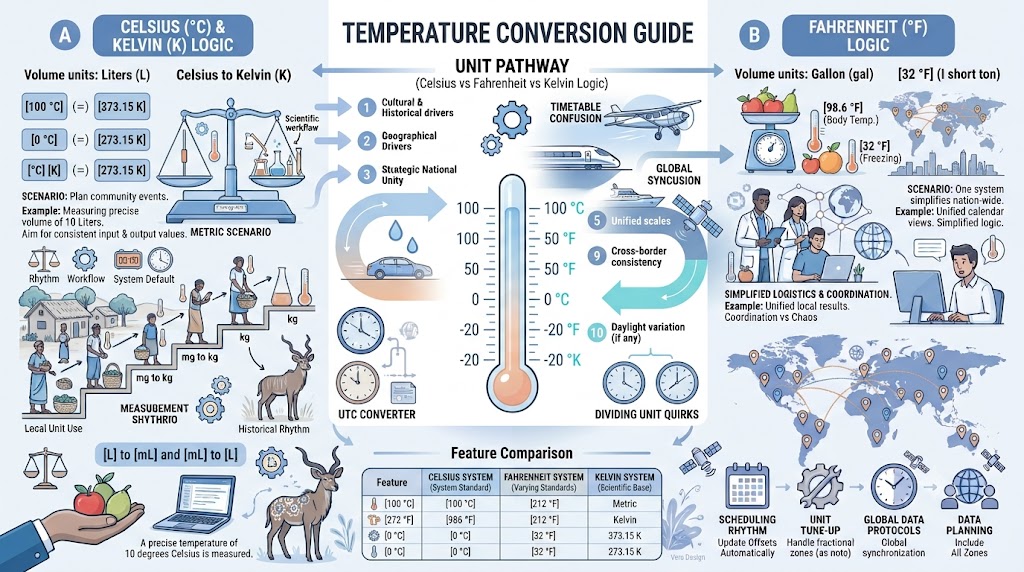
Temperature Conversions
| From | To | Formula |
|---|---|---|
| Celsius (°C) | Fahrenheit (°F) | °F = (°C × 9/5) + 32 |
| Fahrenheit (°F) | Celsius (°C) | °C = (°F − 32) × 5/9 |
| Celsius (°C) | Kelvin (K) | K = °C + 273.15 |
| Kelvin (K) | Celsius (°C) | °C = K − 273.15 |
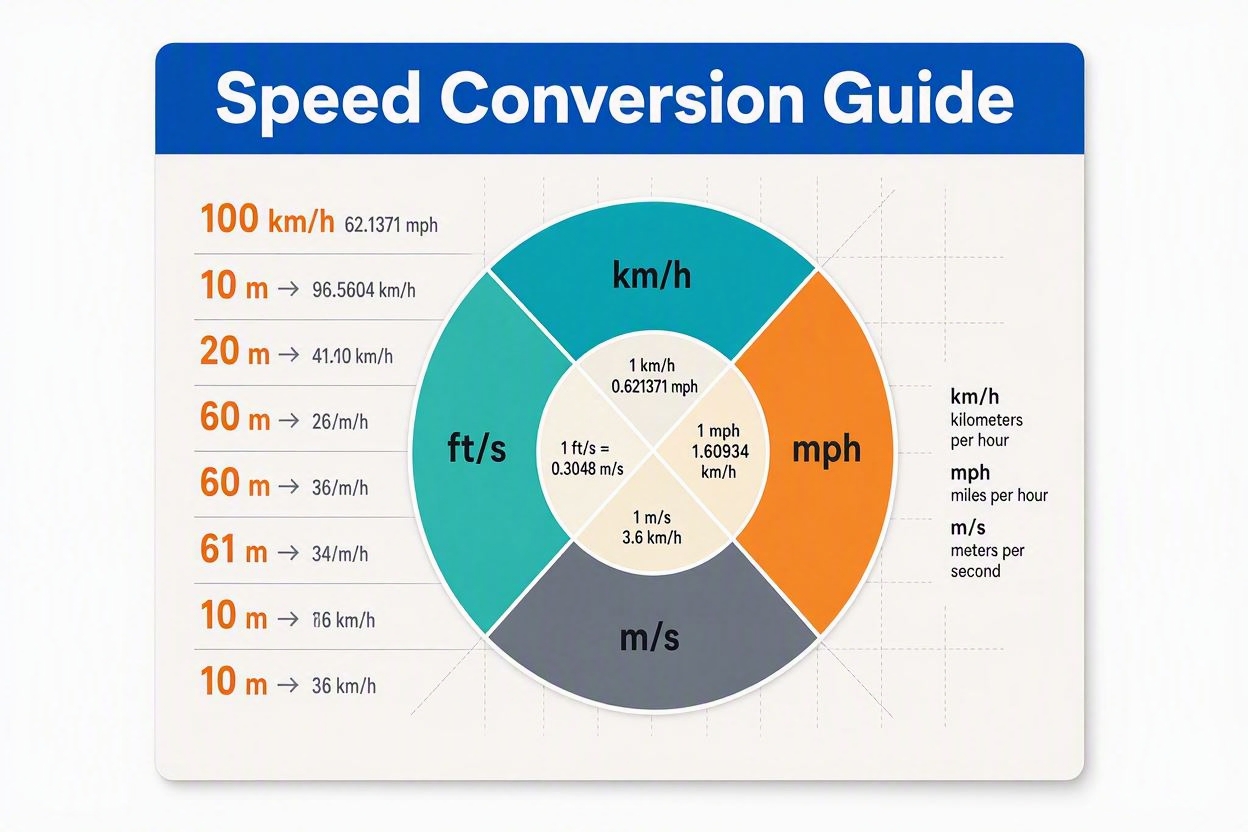
Speed Conversions
| Unit | Equivalent |
|---|---|
| 1 mph | 1.60934 km/h |
| 1 km/h | 0.621371 mph |
| 1 knot | 1.852 km/h |
| 1 m/s | 3.6 km/h |
| 1 m/s | 2.23694 mph |
Step-by-Step Conversion Examples
Example 1: Length Conversion
Problem: Convert 15 inches to centimeters.
Step 1: Identify the conversion factor
- 1 inch = 2.54 cm
Step 2: Set up the calculation
- cm = inches × 2.54
Step 3: Calculate
- 15 × 2.54 = 38.1 cm
Answer: 15 inches = 38.1 cm
Example 2: Weight Conversion
Problem: Convert 75 kilograms to pounds.
Step 1: Identify the conversion factor
- 1 kg = 2.20462 lb
Step 2: Set up the calculation
- lb = kg × 2.20462
Step 3: Calculate
- 75 × 2.20462 = 165.3465 lb
Answer: 75 kg = 165.35 lb
Example 3: Temperature Conversion
Problem: Convert 68°F to Celsius.
Step 1: Use the formula
- °C = (°F − 32) × 5/9
Step 2: Substitute
- °C = (68 − 32) × 5/9
- °C = 36 × 5/9
- °C = 20°C
Answer: 68°F = 20°C
Example 4: Volume Conversion
Problem: Convert 5 US gallons to liters.
Step 1: Identify the conversion factor
- 1 US gal = 3.78541 L
Step 2: Set up the calculation
- L = gallons × 3.78541
Step 3: Calculate
- 5 × 3.78541 = 18.92705 L
Answer: 5 US gal = 18.93 L
Example 5: Speed Conversion
Problem: Convert 60 mph to km/h.
Step 1: Identify the conversion factor
- 1 mph = 1.60934 km/h
Step 2: Set up the calculation
- km/h = mph × 1.60934
Step 3: Calculate
- 60 × 1.60934 = 96.5604 km/h
Answer: 60 mph = 96.56 km/h
Example 6: Multi-Step Conversion
Problem: Convert 50 miles per gallon to kilometers per liter.
Step 1: Convert miles to kilometers
- 50 miles × 1.60934 = 80.467 km
Step 2: Convert gallons to liters
- 1 US gallon = 3.78541 L
Step 3: Calculate km/L
- 80.467 km / 3.78541 L = 21.25 km/L
Answer: 50 mpg = 21.25 km/L
Mental Math Shortcuts
Quick Estimates for Everyday Use
| Exact Conversion | Quick Estimate |
|---|---|
| 1 inch = 2.54 cm | 1 inch ≈ 2.5 cm |
| 1 meter = 3.28 ft | 1 meter ≈ 3.3 ft |
| 1 mile = 1.61 km | 1 mile ≈ 1.6 km |
| 1 km = 0.62 mi | 1 km ≈ 0.6 mi |
| 1 kg = 2.205 lb | 1 kg ≈ 2.2 lb |
| 1 lb = 0.454 kg | 1 lb ≈ 0.45 kg |
| 1 oz = 28.35 g | 1 oz ≈ 30 g |
| 1 US gal = 3.785 L | 1 gal ≈ 3.8 L |
| 1 L = 0.264 gal | 1 L ≈ 0.25 gal |
| 1 cup = 236.6 mL | 1 cup ≈ 240 mL |
| 1 fl oz = 29.57 mL | 1 fl oz ≈ 30 mL |
Quick Mental Tricks
Miles to km: Multiply by 1.6 (or × 8 ÷ 5)
- 50 mi × 1.6 = 80 km (exact: 80.47 km)
km to miles: Multiply by 0.6 (or × 5 ÷ 8)
- 100 km × 0.6 = 60 mi (exact: 62.14 mi)
kg to lb: Double it and add 10%
- 70 kg × 2 = 140 lb; 140 × 1.1 = 154 lb (exact: 154.32 lb)
lb to kg: Halve it and subtract 10%
- 150 lb ÷ 2 = 75; 75 × 0.9 = 67.5 kg (exact: 68.04 kg)
L to gal: Divide by 4
- 20 L ÷ 4 = 5 gal (exact: 5.28 gal)
gal to L: Multiply by 4
- 5 gal × 4 = 20 L (exact: 18.93 L)
°C to °F: Double it and add 30
- 25°C × 2 + 30 = 80°F (exact: 77°F)
°F to °C: Subtract 30 and halve it
- 80°F − 30 = 50; 50 ÷ 2 = 25°C (exact: 26.7°C)
Common Mistakes to Avoid
1. Using the Wrong Temperature Formula
Mistake: Multiplying °C by 1.8 without adding 32.
Correct: °F = (°C × 9/5) + 32
Example:
- ❌ 25°C × 1.8 = 45°F (wrong!)
- ✅ (25 × 1.8) + 32 = 77°F (correct!)
2. Mixing Up US and UK Gallons
Mistake: Treating US gallons and UK gallons as the same.
Correct:
- US gallon = 3.785 L
- UK gallon = 4.546 L
- UK gallon is about 20% larger!
3. Forgetting to Convert Both Units in Compound Units
Mistake: Converting only the numerator or only the denominator.
Example: 10 kg/m³ to g/cm³
- Convert kg to g AND m³ to cm³
Correct:
- 10 kg/m³ = 10 × (1000 g / 1 kg) × (1 m³ / 1,000,000 cm³)
- = 10 × 1000 / 1,000,000 = 0.01 g/cm³
4. Confusing Units with Similar Names
Common Confusions:
- Ounce (mass) vs fluid ounce (volume)
- Short ton (US = 2000 lb) vs metric ton (tonne = 1000 kg)
- Mile (statute) vs nautical mile (1.1508 statute miles)
5. Rounding Too Early
Mistake: Rounding intermediate values in multi-step conversions.
Correct: Keep full precision until the final answer, then round.
Unit Converter vs Manual Calculation
| Aspect | Manual Calculation | Unit Converter |
|---|---|---|
| Speed | Slow for complex conversions | Instant |
| Accuracy | Prone to human error | Highly accurate |
| Unit coverage | Limited to what you know | Hundreds of units |
| Temperature | Easy to mess up | Handles correctly |
| Compound units | Complicated | Handles easily |
| Learning value | Helps you understand | Gives immediate answers |
When to Use a Unit Converter
- ✅ You need precise results
- ✅ You're doing complex conversions
- ✅ You're working with unfamiliar units
- ✅ You're short on time
- ✅ You want to double-check your manual work
When to Calculate Manually
- ✅ You need a quick estimate
- ✅ You're learning how units work
- ✅ You don't have a calculator or internet
- ✅ You're doing a sanity check on a result
Real-World Conversion Scenarios
1. International Travel
Scenario: You're driving in Europe and see a speed limit sign: 120 km/h.
Question: How fast is that in mph?
Solution: 120 × 0.621 = 74.5 mph
Answer: About 75 mph
2. Cooking
Scenario: You find an Italian recipe that calls for 500g of flour. Your kitchen scale measures in ounces.
Question: How many ounces?
Solution: 500 × 0.035 = 17.64 oz
Answer: About 17.6 oz
3. Buying Property Abroad
Scenario: A Spanish apartment is listed as 150 m². You want to know the size in square feet.
Question: How many square feet?
Solution: 150 × 10.764 = 1,614.6 sq ft
Answer: About 1,615 sq ft
4. Online Shopping
Scenario: A TV dimensions are 120 cm × 75 cm × 30 cm. You need to know if it will fit in your 50-inch cabinet.
Question: Convert cm to inches.
Solution:
- 120 cm / 2.54 = 47.24 inches
- 75 cm / 2.54 = 29.53 inches
- 30 cm / 2.54 = 11.81 inches
Answer: TV is 47.2" × 29.5" × 11.8"
5. Science Homework
Scenario: Your physics problem asks: "Convert 25°C to Kelvin and Fahrenheit."
Solution:
- K = 25 + 273.15 = 298.15 K
- °F = (25 × 9/5) + 32 = 77°F
Answer: 25°C = 298.15 K = 77°F
SI Prefixes Reference
| Prefix | Symbol | Factor | Example |
|---|---|---|---|
| pico | p | 10⁻¹² | 1 picometer = 10⁻¹² m |
| nano | n | 10⁻⁹ | 1 nanometer = 10⁻⁹ m |
| micro | μ | 10⁻⁶ | 1 micrometer = 10⁻⁶ m |
| milli | m | 10⁻³ | 1 millimeter = 0.001 m |
| centi | c | 10⁻² | 1 centimeter = 0.01 m |
| deci | d | 10⁻¹ | 1 decimeter = 0.1 m |
| deca | da | 10¹ | 1 decameter = 10 m |
| hecto | h | 10² | 1 hectometer = 100 m |
| kilo | k | 10³ | 1 kilometer = 1,000 m |
| mega | M | 10⁶ | 1 megameter = 1,000,000 m |
| giga | G | 10⁹ | 1 gigameter = 1,000,000,000 m |
| tera | T | 10¹² | 1 terameter = 1,000,000,000,000 m |
Quick Reference Cheat Sheet
╔══════════════════════════════════════════════════════════════════╗
║                    UNIT CONVERSION CHEAT SHEET                    ║
╠══════════════════════════════════════════════════════════════════╣
║                                                                  ║
║  LENGTH:                                                         ║
║  1 in  = 2.54 cm      |     1 cm  = 0.394 in                   ║
║  1 ft  = 0.305 m      |     1 m   = 3.281 ft                   ║
║  1 mi  = 1.609 km     |     1 km  = 0.621 mi                   ║
║                                                                  ║
║  WEIGHT:                                                         ║
║  1 lb  = 0.454 kg     |     1 kg  = 2.205 lb                   ║
║  1 oz  = 28.35 g      |     1 g   = 0.035 oz                   ║
║                                                                  ║
║  VOLUME:                                                         ║
║  1 gal = 3.785 L      |     1 L   = 0.264 gal                  ║
║  1 cup = 236.6 mL     |     1 mL  = 0.004 cup                  ║
║  1 fl oz = 29.57 mL   |     1 mL  = 0.034 fl oz                ║
║                                                                  ║
║  TEMPERATURE:                                                    ║
║  °F = (°C × 9/5) + 32                                            ║
║  °C = (°F − 32) × 5/9                                            ║
║  0°C = 32°F     |     100°C = 212°F                            ║
║  20°C = 68°F    |     37°C = 98.6°F                            ║
║                                                                  ║
║  SPEED:                                                          ║
║  1 mph = 1.609 km/h |     1 km/h = 0.621 mph                   ║
║  1 knot = 1.852 km/h |     1 m/s = 3.6 km/h                    ║
║                                                                  ║
║  QUICK ESTIMATES:                                                ║
║  1 mi ≈ 1.6 km     |     1 km ≈ 0.6 mi                        ║
║  1 kg ≈ 2.2 lb     |     1 lb ≈ 0.45 kg                       ║
║  1 gal ≈ 3.8 L     |     1 L ≈ 0.25 gal                       ║
║  °C ≈ (°F - 30) ÷ 2 |     °F ≈ (°C × 2) + 30                   ║
║                                                                  ║
╚══════════════════════════════════════════════════════════════════╝
Frequently Asked Questions
Q: What is the easiest way to convert units?
Use dimensional analysis: write your starting value, multiply by conversion factors, and cancel units. Or simply use a unit converter tool for instant results.
Q: Why do I need to convert units?
You need to convert units when using measurements in different systems: travel (miles vs km), cooking (cups vs mL), science (imperial vs metric), shopping (inches vs cm), and more.
Q: What is the most common unit conversion?
Temperature conversion (Celsius ↔ Fahrenheit) and length conversion (inches ↔ cm, miles ↔ km) are among the most common.
Q: How do I convert temperature between °C and °F?
- °F = (°C × 9/5) + 32
- °C = (°F − 32) × 5/9
Q: Are US and UK gallons the same?
No. US gallon = 3.785 L, UK gallon = 4.546 L. UK gallon is about 20% larger.
Q: What is dimensional analysis?
A method of converting units by treating units like variables and canceling them out. It's the most reliable conversion method.
Q: How do I convert compound units?
Convert each component separately. For example, for km/h to m/s, convert km to m and h to s separately.
Q: What's the difference between mass and weight?
Mass is the amount of matter (kg, lb). Weight is the force of gravity on that mass. On Earth, they're used interchangeably for everyday purposes.
Q: Why do we use different measurement systems?
Historical reasons. The metric system spread globally, but the US kept the imperial system due to established infrastructure and cultural habits.
Q: How can I convert units quickly without a calculator?
Use mental shortcuts: 1 mile ≈ 1.6 km, 1 kg ≈ 2.2 lb, 1 inch ≈ 2.5 cm. For temperature: double °C and add 30 for °F.
How to Use the Unit Converter
- Select the category — Length, Weight, Volume, Temperature, Speed, etc.
- Choose your input unit — e.g.,
mi(mile) orkg(kilogram) - Choose your output unit — e.g.,
km(kilometer) orlb(pound) - Enter the value — Type the number you want to convert
- Get the result — Instant, accurate conversion
Available Categories
The converter supports all 15+ categories:
| Category | Example Units |
|---|---|
| Length | m, ft, in, km, mi, cm, mm, yd, nmi |
| Weight | kg, lb, g, oz, st, T, t |
| Volume | L, gal, mL, cup, pint, quart, m³ |
| Area | m², ft², ac, ha, km², mi² |
| Speed | km/h, mph, m/s, kn, ft/s |
| Temperature | °C, °F, K |
| Time | s, min, hr, d, wk |
| Pressure | Pa, kPa, psi, atm, bar |
| Energy | J, cal, BTU, kWh, kJ |
| Power | W, kW, MW, hp |
| Data Rate | bps, kbps, Mbps, Gbps |
| Storage | B, KB, MB, GB, TB |
| Frequency | Hz, kHz, MHz, GHz |
| Angle | deg, rad |
| Fuel Economy | mpg, L/100km |
Try the Unit Converter
Ready to convert units the easy way? Use our free unit converter at:
https://www.easyconvertunits.com/
It supports all common measurement units with instant, accurate conversions and a clean, easy-to-use interface.
Final Thoughts
Unit conversion is a practical skill that you'll use throughout your life. Whether you're traveling abroad, cooking a new recipe, working on a home project, studying science, or simply shopping online, the ability to convert between units confidently will save you time, money, and frustration.
Key takeaways:
- All conversions use the same logic — multiply by a conversion factor that equals 1
- Dimensional analysis is foolproof — cancel units like variables
- Learn a few key conversion factors — they'll cover 90% of your needs
- Use mental shortcuts for quick estimates — precision isn't always necessary
- Use a unit converter for precision — when accuracy matters, let a tool handle the math
Remember: The number changes, but the physical quantity stays exactly the same. 1 meter is 1 meter, whether you call it 3.28 feet or 100 centimeters.
Tags: how to convert units, unit conversion guide, conversion tutorial, unit converter, measurement conversion, length conversion, weight conversion, temperature conversion, volume conversion, speed conversion, conversion formulas, dimensional analysis, factor label method, metric conversion, imperial conversion, unit conversion tips, how to convert metric to imperial, how to convert imperial to metric, step by step unit conversion, unit conversion examples, conversion factors, unit conversion calculator, free unit converter, convert units easily