Volume Conversion Guide: Liters, Gallons, Cups, Cubic Meters & More – Complete Reference
Volume is one of the most frequently measured quantities in daily life. From measuring ingredients for cooking, filling your car with fuel, buying beverages, or calculating the capacity of a swimming pool, understanding volume conversions is essential.
This comprehensive guide covers everything you need to know about volume conversions, featuring all 33 volume units available in the EasyConvertUnits tool.
Try it now: Use our free volume converter here
What Is Volume?
Volume is the amount of three-dimensional space occupied by a substance or object. It is measured in cubic units (like cubic meters) or liquid units (like liters and gallons).
The standard unit of volume in the International System of Units (SI) is the cubic meter (m³). The liter (L) is also commonly used for everyday measurements.
Volume measurements are used in:
- Cooking and baking
- Beverage and liquid measurements
- Fuel consumption
- Construction and architecture
- Chemistry and science
- Shipping and packaging
- Aquariums and pools
All Volume Units at a Glance
Based on the EasyConvertUnits data structure, here are all 33 supported volume units:
Metric Volume Units
| Unit | Symbol | Value in Liters | Common Use |
|---|---|---|---|
| Cubic Meter | m³ | 1,000 L | SI base unit, construction |
| Cubic Kilometer | km³ | 1,000,000,000,000 L | Large-scale geography |
| Cubic Mile | mi³ | 4,168,181,825.44 L | Large-scale geography |
| Cubic Decameter | dam³ | 1,000,000 L | Large-scale measurement |
| Cubic Hectometer | hm³ | 1,000,000,000 L | Reservoir capacity |
| Cubic Decimeter | dm³ | 1 L | Scientific measurement |
| Cubic Centimeter | cm³ | 0.001 L | Engine displacement, small volumes |
| Cubic Millimeter | mm³ | 0.000001 L | Microscopic volumes |
| Cubic Feet | ft³ | 28.3168 L | Construction, refrigeration |
| Cubic Inch | in³ | 0.0163871 L | Engine displacement |
| Cubic Yard | yd³ | 764.555 L | Construction, landscaping |
| Kiloliter | kL | 1,000 L | Industrial, large containers |
| Hectoliter | hL | 100 L | Agriculture, brewing |
| Decaliter | daL | 10 L | Large cooking, industrial |
| Liter | L | 1 L | Everyday use worldwide |
| Deciliter | dL | 0.1 L | Scientific, nutrition |
| Centiliter | cL | 0.01 L | Beverages, wine |
| Milliliter | mL | 0.001 L | Cooking, medicine |
| Microliter | μL | 0.000001 L | Scientific, lab work |
| Nanoliter | nL | 0.000000001 L | Scientific, DNA analysis |
| Megaliter | ML | 1,000,000 L | Large-scale water measurement |
Imperial / US Customary Volume Units
| Unit | Symbol | Value in Liters | Common Use |
|---|---|---|---|
| US Gallon | us_gal | 3.78541 L | Fuel, milk, beverages (US) |
| US Quart | us_qt | 0.946353 L | Milk, cooking (US) |
| US Pint | us_pt | 0.473176 L | Beer, ice cream (US) |
| US Cup | us_cup | 0.236588 L | Cooking, recipes (US) |
| US Fluid Ounce | us_floz | 0.0295735 L | Beverages, cooking (US) |
| US Tablespoon | us_tbsp | 0.0147868 L | Cooking (US) |
| US Teaspoon | us_tsp | 0.00492892 L | Cooking (US) |
| Imperial Gallon | imp_gal | 4.54609 L | Fuel (UK, Canada) |
| Imperial Quart | imp_qt | 1.13652 L | Dairy (UK) |
| Imperial Pint | imp_pt | 0.568261 L | Beer (UK) |
| Imperial Fluid Ounce | imp_floz | 0.0284131 L | Beverages (UK) |
| Imperial Tablespoon | imp_tbsp | 0.0177582 L | Cooking (UK) |
| Imperial Teaspoon | imp_tsp | 0.00591939 L | Cooking (UK) |
Metric Volume Units (SI System)
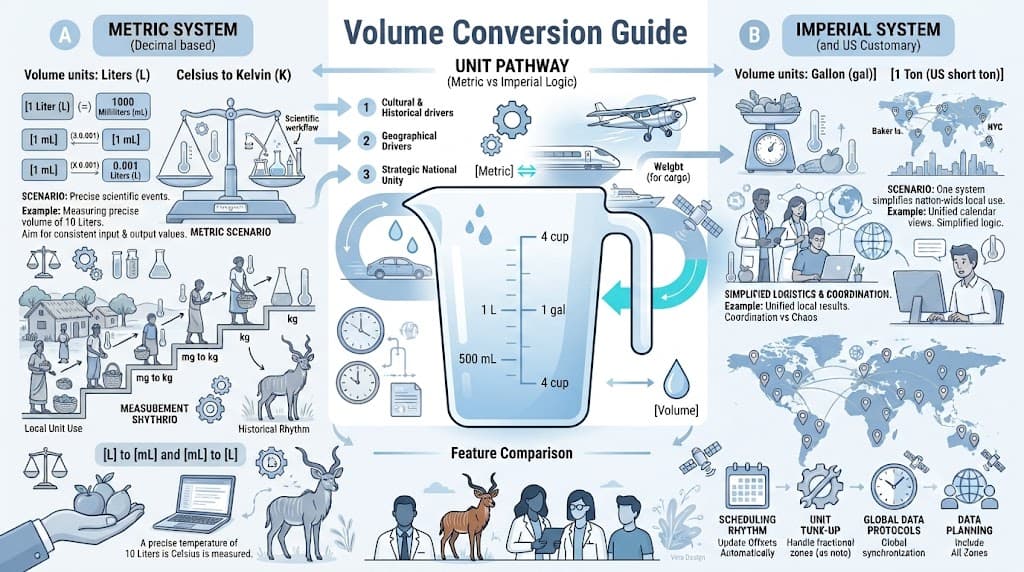
The metric system is decimal-based, making conversions simple: just multiply or divide by powers of 10.
From Smallest to Largest
| Unit | Symbol | Value in Liters |
|---|---|---|
| Nanoliter | nL | 10⁻⁹ L |
| Microliter | μL | 10⁻⁶ L |
| Milliliter | mL | 0.001 L |
| Centiliter | cL | 0.01 L |
| Deciliter | dL | 0.1 L |
| Liter | L | 1 L (base) |
| Decaliter | daL | 10 L |
| Hectoliter | hL | 100 L |
| Kiloliter | kL | 1,000 L |
| Megaliter | ML | 1,000,000 L |
| Cubic Meter | m³ | 1,000 L |
| Cubic Decameter | dam³ | 1,000,000 L |
| Cubic Kilometer | km³ | 1,000,000,000,000 L |
Common Metric Conversions
| From | To | Calculation |
|---|---|---|
| Liters to milliliters | mL = L × 1,000 | 1 L = 1,000 mL |
| Liters to cubic meters | m³ = L ÷ 1,000 | 1,000 L = 1 m³ |
| Milliliters to liters | L = mL ÷ 1,000 | 1,000 mL = 1 L |
| Kiloliters to liters | L = kL × 1,000 | 1 kL = 1,000 L |
| Cubic meters to liters | L = m³ × 1,000 | 1 m³ = 1,000 L |
Quick Memory Tricks for Metric
King Henry Died By Drinking Chocolate Milk — A mnemonic for metric prefixes:
- Kilo (1,000)
- Hecto (100)
- Deca (10)
- Base (1)
- Deci (0.1)
- Centi (0.01)
- Milli (0.001)
For volume, the base unit is the liter (L).
Imperial Volume Units (US Customary)
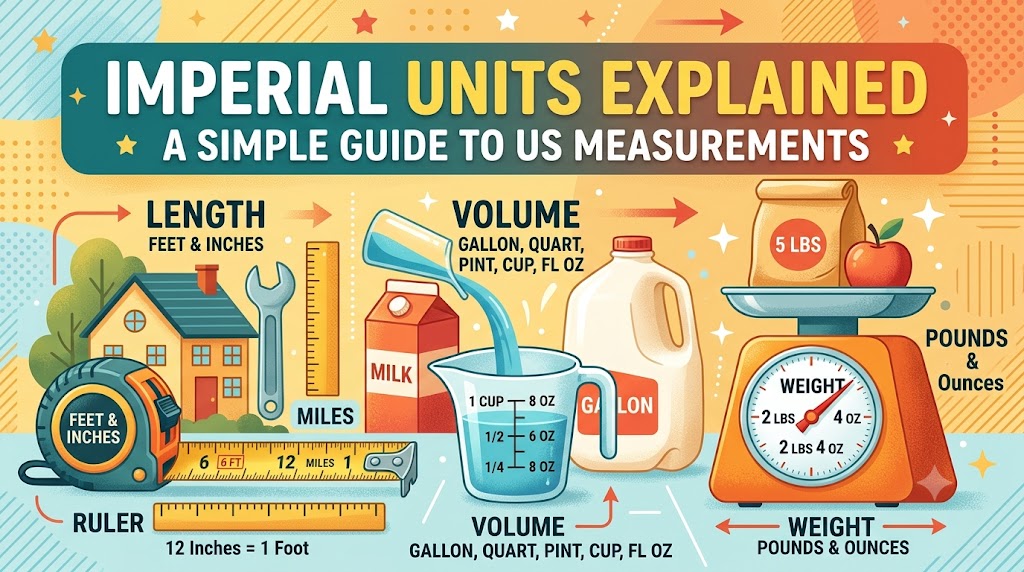
The imperial system uses inconsistent conversion factors, making it harder to memorize but still widely used in the US and UK.
US Customary Units
| Unit | Symbol | Value in US Gallons | Value in Liters |
|---|---|---|---|
| US Teaspoon | us_tsp | 1/768 gal | 0.00492892 L |
| US Tablespoon | us_tbsp | 1/256 gal | 0.0147868 L |
| US Fluid Ounce | us_floz | 1/128 gal | 0.0295735 L |
| US Cup | us_cup | 1/16 gal | 0.236588 L |
| US Pint | us_pt | 1/8 gal | 0.473176 L |
| US Quart | us_qt | 1/4 gal | 0.946353 L |
| US Gallon | us_gal | 1 gal | 3.78541 L |
US Customary Relationships
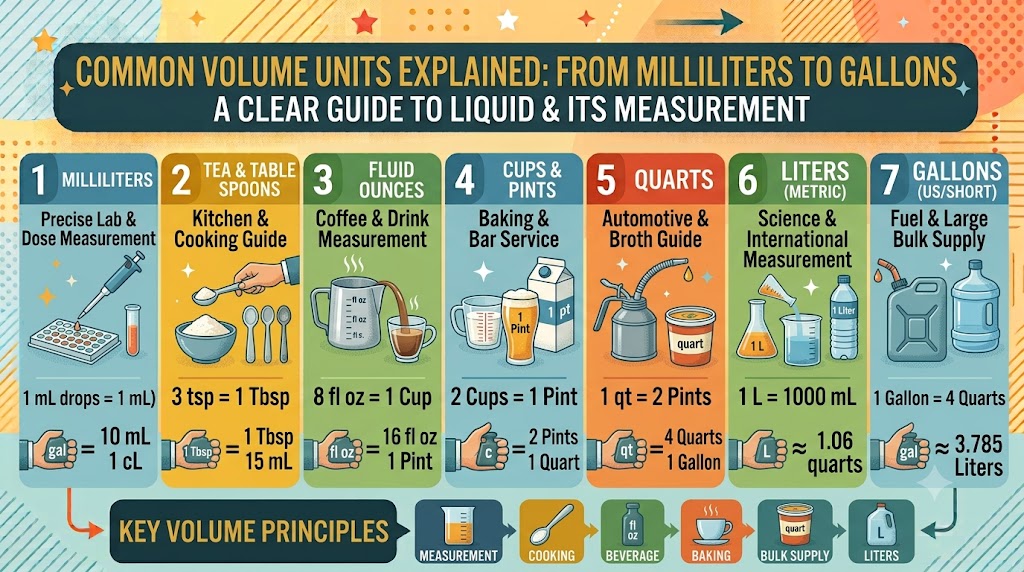
1 US gallon = 4 quarts = 8 pints = 16 cups = 128 fluid ounces
1 US quart = 2 pints = 4 cups = 32 fluid ounces
1 US pint = 2 cups = 16 fluid ounces
1 US cup = 8 fluid ounces = 16 tablespoons = 48 teaspoons
1 US tablespoon = 3 teaspoons
Imperial (UK) Units
| Unit | Symbol | Value in Imperial Gallons | Value in Liters |
|---|---|---|---|
| Imperial Teaspoon | imp_tsp | 1/960 gal | 0.00591939 L |
| Imperial Tablespoon | imp_tbsp | 1/320 gal | 0.0177582 L |
| Imperial Fluid Ounce | imp_floz | 1/160 gal | 0.0284131 L |
| Imperial Pint | imp_pt | 1/8 gal | 0.568261 L |
| Imperial Quart | imp_qt | 1/4 gal | 1.13652 L |
| Imperial Gallon | imp_gal | 1 gal | 4.54609 L |
Imperial Relationships
1 Imperial gallon = 4 quarts = 8 pints = 160 fluid ounces
1 Imperial quart = 2 pints = 40 fluid ounces
1 Imperial pint = 20 fluid ounces
1 Imperial fluid ounce = 2 tablespoons = 6 teaspoons
Metric ↔ Imperial Conversions
These are the most common volume conversions you'll need in everyday life.
| From | To | Calculation | Example |
|---|---|---|---|
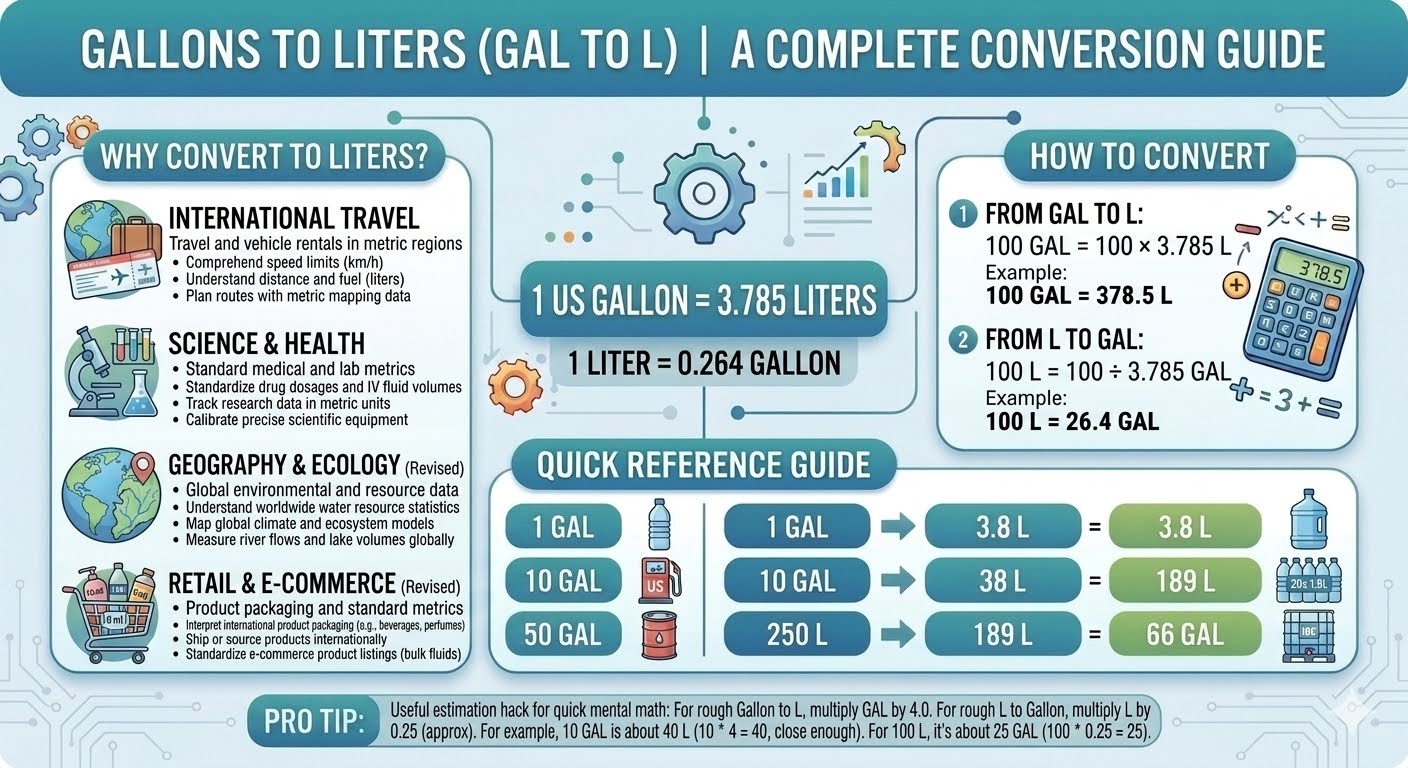
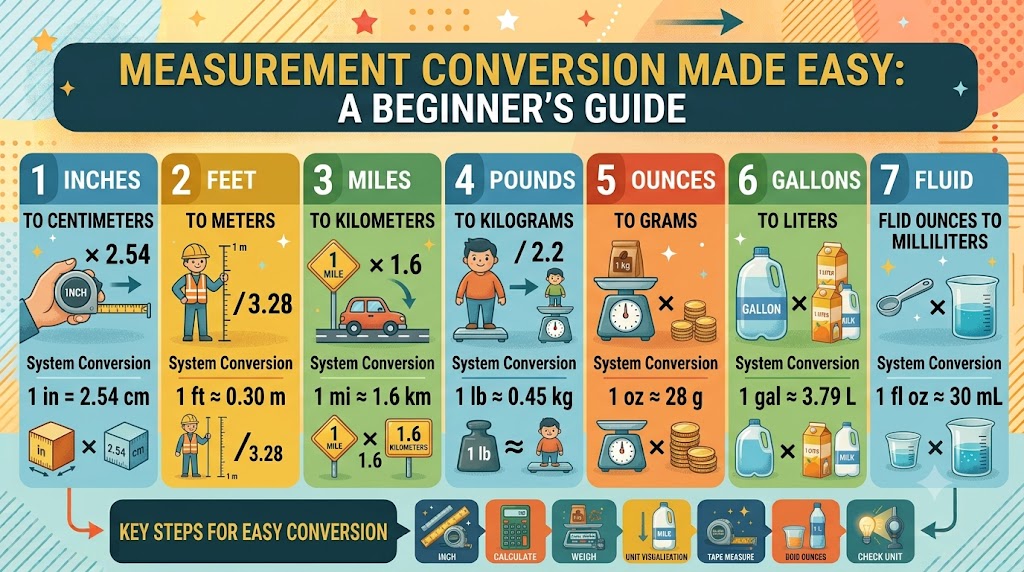
| US Gallons to Liters | L = us_gal × 3.78541 | 1 US gal = 3.79 L | |
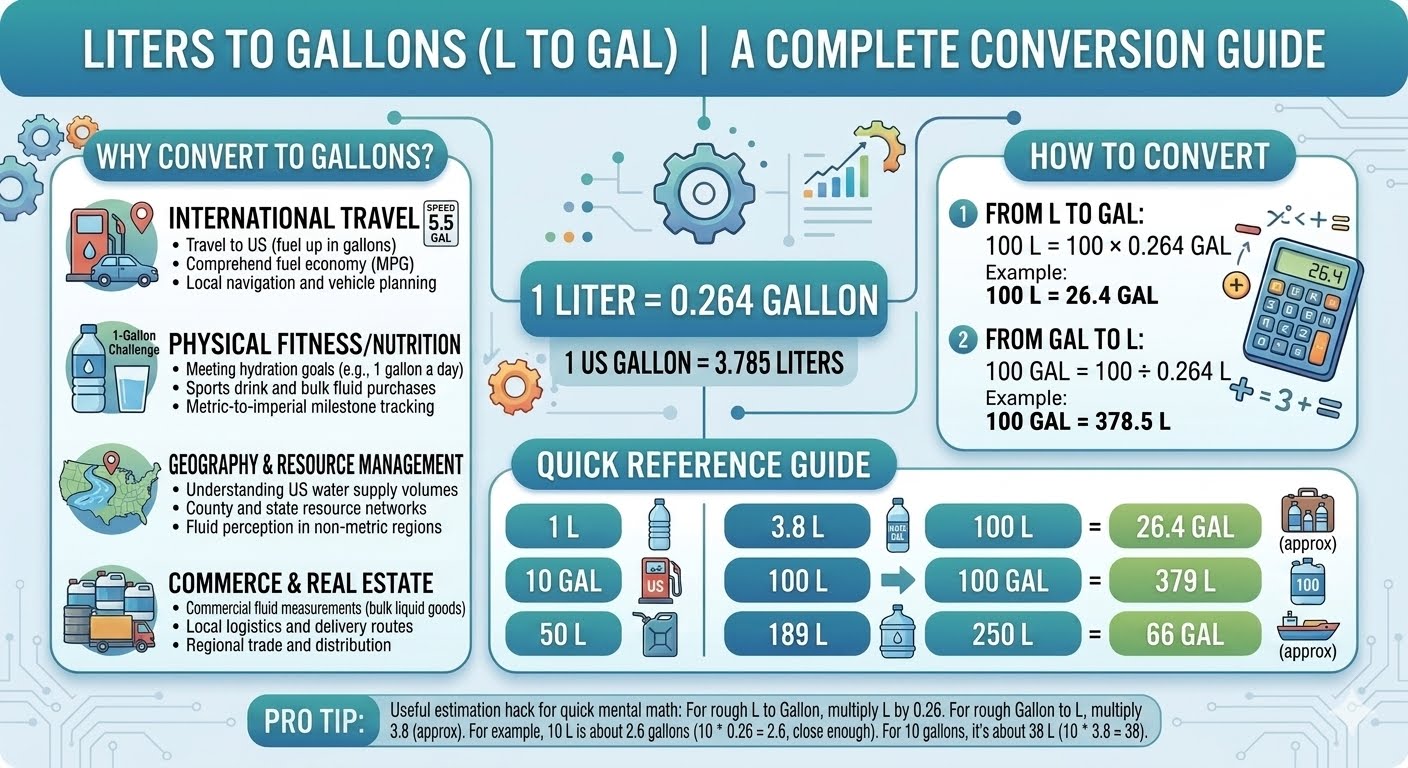
| Liters to US Gallons | us_gal = L ÷ 3.78541 | 3.79 L = 1 US gal | |
| UK Gallons to Liters | L = imp_gal × 4.54609 | 1 UK gal = 4.55 L | |
| Liters to UK Gallons | imp_gal = L ÷ 4.54609 | 4.55 L = 1 UK gal | |
| Cups to mL | mL = us_cup × 236.588 | 1 cup = 236.59 mL | |
| mL to Cups | us_cup = mL ÷ 236.588 | 236.59 mL = 1 cup | |
| Fluid Ounces to mL | mL = us_floz × 29.5735 | 1 fl oz = 29.57 mL | |
| mL to Fluid Ounces | us_floz = mL ÷ 29.5735 | 29.57 mL = 1 fl oz | |
| Pints to Liters | L = us_pt × 0.473176 | 1 US pt = 0.473 L | |
| Liters to Pints | us_pt = L ÷ 0.473176 | 0.473 L = 1 US pt | |
| Quarts to Liters | L = us_qt × 0.946353 | 1 US qt = 0.946 L | |
| Liters to Quarts | us_qt = L ÷ 0.946353 | 0.946 L = 1 US qt |
Cubic Volume Units (m³, ft³, in³, etc.)
Cubic Units Comparison
| Unit | Symbol | Value in Liters | Common Use |
|---|---|---|---|
| Cubic Millimeter | mm³ | 0.000001 L | Micro-science |
| Cubic Centimeter | cm³ | 0.001 L | Engine displacement, chemistry |
| Cubic Inch | in³ | 0.0163871 L | Engine displacement |
| Cubic Decimeter | dm³ | 1 L | Scientific (1 L = 1 dm³) |
| Cubic Foot | ft³ | 28.3168 L | Construction, refrigeration |
| Cubic Yard | yd³ | 764.555 L | Construction, landscaping |
| Cubic Meter | m³ | 1,000 L | SI base, construction |
| Cubic Kilometer | km³ | 1,000,000,000,000 L | Geography, oceanography |
Key Cubic Relationships
- 1 L = 1 dm³ = 1,000 cm³ = 1,000,000 mm³
- 1 m³ = 1,000 L = 1,000,000 cm³
- 1 ft³ ≈ 28.32 L = 1,728 in³
- 1 yd³ ≈ 764.55 L = 27 ft³
US vs UK Gallons: Important Distinction!
Many people don't realize that US and UK gallons are different — and the difference is significant!
| US Gallon | UK (Imperial) Gallon | |
|---|---|---|
| Liters | 3.78541 L | 4.54609 L |
| Difference | Smaller | About 20% larger |
| Fluid Ounces | 128 fl oz | 160 fl oz |
| Pints | 8 pints | 8 pints (but pints differ!) |
| Common Use | United States | United Kingdom, Canada |
Example: The Impact of This Difference
A car advertised with 30 mpg in the US gets:
- US: 30 miles per 3.785 L
- UK: 30 miles per 4.546 L
The UK version is actually about 20% more fuel-efficient per gallon because the gallon is larger!
Conversion Between US and UK Gallons
| From | To | Calculation | Example |
|---|---|---|---|
| US Gallons to UK Gallons | imp_gal = us_gal × 0.832674 | 1 US gal = 0.833 imp gal | |
| UK Gallons to US Gallons | us_gal = imp_gal × 1.20095 | 1 imp gal = 1.201 US gal |
Step-by-Step Conversion Examples
Example 1: US Gallons to Liters
Problem: Convert 5 US gallons to liters.
Step 1: Identify the conversion factor
- 1 US gallon = 3.78541 L
Step 2: Set up the calculation
- L = gallons × 3.78541
Step 3: Calculate
- 5 × 3.78541 = 18.92705 L
Answer: 5 US gal = 18.93 L
Example 2: Liters to US Gallons
Problem: Convert 10 liters to US gallons.
Step 1: Identify the conversion factor
- 1 L = 0.264172 US gallons
Step 2: Set up the calculation
- us_gal = L × 0.264172
Step 3: Calculate
- 10 × 0.264172 = 2.64172 US gal
Answer: 10 L = 2.64 US gal
Example 3: Cups to Milliliters
Problem: Convert 2 cups to milliliters.
Step 1: Identify the conversion factor
- 1 cup = 236.588 mL
Step 2: Set up the calculation
- mL = cups × 236.588
Step 3: Calculate
- 2 × 236.588 = 473.176 mL
Answer: 2 cups = 473.18 mL
Example 4: Cubic Feet to Liters
Problem: Convert 3 cubic feet to liters.
Step 1: Identify the conversion factor
- 1 ft³ = 28.3168 L
Step 2: Set up the calculation
- L = ft³ × 28.3168
Step 3: Calculate
- 3 × 28.3168 = 84.9504 L
Answer: 3 ft³ = 84.95 L
Example 5: UK Gallons to Liters
Problem: Convert 2 UK gallons to liters.
Step 1: Identify the conversion factor
- 1 UK gallon = 4.54609 L
Step 2: Set up the calculation
- L = imp_gal × 4.54609
Step 3: Calculate
- 2 × 4.54609 = 9.09218 L
Answer: 2 UK gal = 9.09 L
Example 6: Fluid Ounces to Milliliters
Problem: Convert 8 fluid ounces to milliliters.
Step 1: Identify the conversion factor
- 1 fl oz = 29.5735 mL
Step 2: Set up the calculation
- mL = fl oz × 29.5735
Step 3: Calculate
- 8 × 29.5735 = 236.588 mL
Answer: 8 fl oz = 236.59 mL (1 cup!)
Quick Estimation Tricks
Volume Quick Estimates
| Exact Conversion | Quick Estimate |
|---|---|
| 1 US gal = 3.785 L | 1 gal ≈ 3.8 L |
| 1 L = 0.264 US gal | 1 L ≈ 0.25 gal (¼ gal) |
| 1 UK gal = 4.546 L | 1 UK gal ≈ 4.5 L |
| 1 cup = 236.6 mL | 1 cup ≈ 240 mL |
| 1 fl oz = 29.57 mL | 1 fl oz ≈ 30 mL |
| 1 mL ≈ 0.034 fl oz | 30 mL ≈ 1 fl oz |
| 1 L ≈ 4.227 cups | 1 L ≈ 4.25 cups |
| 1 ft³ = 28.32 L | 1 ft³ ≈ 28 L |
Mental Math Shortcuts
Gallons to Liters: Multiply by 4 (rough estimate)
- 5 gal × 4 = 20 L (exact: 18.93 L)
Liters to Gallons: Divide by 4 (rough estimate)
- 20 L ÷ 4 = 5 gal (exact: 5.28 gal)
Cups to mL: Multiply by 240
- 2 cups × 240 = 480 mL (exact: 473.18 mL)
Fluid Ounces to mL: Multiply by 30
- 8 fl oz × 30 = 240 mL (exact: 236.59 mL)
Real-World Volume Conversion Examples
1. Cooking and Baking
Scenario: You find a US recipe that calls for 2 cups of flour. Your measuring cup measures in milliliters.
Question: How many milliliters of flour do you need?
Solution: 2 × 236.588 = 473.176 mL
Answer: 2 cups ≈ 473 mL
2. Fuel Purchase Abroad
Scenario: You're driving in Europe and need to fill 50 liters of fuel. You're used to gallons.
Question: How many US gallons is 50 liters?
Solution: 50 × 0.264172 = 13.2086 US gal
Answer: 50 L = 13.21 US gal
3. Comparing Fuel Efficiency
Scenario: A US car gets 25 mpg. A European car gets 9 L/100km. Which is more efficient?
Question: What is 25 mpg in L/100km?
Solution: L/100km = 235.215 ÷ 25 = 9.41 L/100km
Answer: 25 mpg = 9.41 L/100km (slightly less efficient than 9 L/100km)
4. Pool Volume
Scenario: Your rectangular pool is 10 m × 5 m × 2 m. You need to know how many liters of water it holds.
Question: What is the volume in liters?
Solution: Volume = 10 × 5 × 2 = 100 m³; 100 × 1,000 = 100,000 L
Answer: 100,000 L (or 26,417 US gallons!)
5. Beverage Comparison
Scenario: A US soda bottle contains 2 liters. The label shows 67.6 fluid ounces.
Question: Is 2 liters exactly 67.6 fl oz?
Solution: 2 × 33.814 = 67.628 fl oz
Answer: Yes, about 67.6 fl oz (matches!)
6. International Recipe
Scenario: You find a UK recipe that calls for 500 mL of milk. Your US measuring cup measures in cups and fluid ounces.
Question: How many cups and fluid ounces is 500 mL?
Solution:
- Cups: 500 ÷ 236.588 = 2.113 cups
- Fluid ounces: 500 ÷ 29.5735 = 16.907 fl oz
Answer: 500 mL ≈ 2 cups + 1 fl oz (or about 17 fl oz)
Volume Conversion Table: Quick Reference
Common Conversions (Exact)
| From | To | Multiply By |
|---|---|---|
| US Gallons | Liters | 3.78541 |
| Liters | US Gallons | 0.264172 |
| UK Gallons | Liters | 4.54609 |
| Liters | UK Gallons | 0.219969 |
| US Quarts | Liters | 0.946353 |
| Liters | US Quarts | 1.05669 |
| US Pints | Liters | 0.473176 |
| Liters | US Pints | 2.11338 |
| US Cups | mL | 236.588 |
| mL | US Cups | 0.00422675 |
| US Fluid Ounces | mL | 29.5735 |
| mL | US Fluid Ounces | 0.033814 |
| US Tablespoons | mL | 14.7868 |
| mL | US Tablespoons | 0.067628 |
| US Teaspoons | mL | 4.92892 |
| mL | US Teaspoons | 0.202884 |
| Imperial Gallons | Liters | 4.54609 |
| Liters | Imperial Gallons | 0.219969 |
| Imperial Pints | Liters | 0.568261 |
| Liters | Imperial Pints | 1.75975 |
| Imperial Fluid Ounces | mL | 28.4131 |
| mL | Imperial Fluid Ounces | 0.0351951 |
| Cubic Meters | Liters | 1,000 |
| Liters | Cubic Meters | 0.001 |
| Cubic Feet | Liters | 28.3168 |
| Liters | Cubic Feet | 0.0353147 |
| Cubic Yards | Liters | 764.555 |
| Liters | Cubic Yards | 0.00130795 |
How to Use the Volume Converter
- Select the category: Volume (id:
volume) - Choose your input unit: e.g.,
L(liter) orus_gal(US gallon) - Choose your output unit: e.g.,
us_galormL - Enter the value: Type the number you want to convert
- Get the result: Instant, accurate conversion
Available Volume Units
The following unit values are available in the converter:
| Unit Value | Display Label | Symbol |
|---|---|---|
cL |
Centiliter | cL |
cm3 |
Cubic Centimeter | cm³ |
dam3 |
Cubic Decameter | dam³ |
dm3 |
Cubic Decimeter | dm³ |
ft3 |
Cubic Feet | ft³ |
in3 |
Cubic Inch | in³ |
km3 |
Cubic Kilometer | km³ |
m3 |
Cubic Meter | m³ |
mi3 |
Cubic Mile | mi³ |
mm3 |
Cubic Millimeter | mm³ |
yd3 |
Cubic Yard | yd³ |
daL |
Decaliter | daL |
dL |
Deciliter | dL |
hL |
Hectoliter | hL |
imp_floz |
Imperial fl oz | imp fl oz |
imp_gal |
Imperial gallon | imp gal |
imp_pt |
Imperial pint | imp pt |
imp_qt |
Imperial quart | imp qt |
imp_tbsp |
Imperial tablespoon | imp tbsp |
imp_tsp |
Imperial teaspoon | imp tsp |
kL |
Kiloliter | kL |
L |
Liter | L |
ML |
Megaliter | ML |
μL |
Microliter | μL |
mL |
Milliliter | mL |
nL |
Nanoliter | nL |
us_cup |
US cup | US cup |
us_floz |
US fl oz | US fl oz |
us_gal |
US gallon | US gal |
us_pt |
US pint | US pt |
us_qt |
US quart | US qt |
us_tbsp |
US tablespoon | US tbsp |
us_tsp |
US teaspoon | US tsp |
Conversion Factors Used
The converter uses the following base factors (all in cubic meters):
volume: {
  'cL': 0.00001,
  'cm3': 0.000001,
  'dam3': 1000,
  'dm3': 0.001,
  'ft3': 0.0283168,
  'in3': 0.0000163871,
  'km3': 1e9,
  'm3': 1,
  'mi3': 4168181825.44,
  'mm3': 1e-9,
  'yd3': 0.764555,
  'daL': 0.01,
  'dL': 0.0001,
  'hL': 0.1,
  'imp_floz': 0.0000284131,
  'imp_gal': 0.00454609,
  'imp_pt': 0.000568261,
  'imp_qt': 0.00113652,
  'imp_tbsp': 0.0000177582,
  'imp_tsp': 0.00000591939,
  'kL': 1000,
  'L': 0.001,
  'ML': 1000000,
  'μL': 1e-9,
  'mL': 0.000001,
  'nL': 1e-12,
  'us_cup': 0.000236588,
  'us_floz': 0.0000295735,
  'us_gal': 0.00378541,
  'us_pt': 0.000473176,
  'us_qt': 0.000946353,
  'us_tbsp': 0.0000147868,
  'us_tsp': 0.00000492892
}
Common Mistakes in Volume Conversion
Mistake 1: Confusing US and UK Gallons
Mistake: Treating US gallons and UK gallons as the same.
Correct:
- US gallon = 3.785 L
- UK gallon = 4.546 L
- UK gallon is about 20% larger!
Mistake 2: Confusing Fluid Ounces and Weight Ounces
Mistake: Using fluid ounces (volume) and weight ounces (mass) interchangeably.
Correct: Fluid ounces measure volume; weight ounces measure mass. They are NOT interchangeable unless the density is known.
Mistake 3: Forgetting to Convert Cubic Factors
Mistake: Using linear conversion factors for cubic measurements.
Example:
- ❌ 1 ft³ = 0.3048 m³ (wrong!)
- ✅ 1 ft³ = (0.3048)³ m³ = 0.0283168 m³
Mistake 4: Confusing 1 L = 1 dm³ vs 1 L = 1 cm³
Mistake: Thinking 1 L = 1 cm³.
Correct: 1 L = 1 dm³ = 1,000 cm³
Mistake 5: Rounding Too Early
Mistake: Rounding intermediate values in multi-step conversions.
Correct: Keep full precision until the final answer, then round.
Volume Conversion Cheat Sheet
Quick Reference Card
╔══════════════════════════════════════════════════════════════════╗
║                       VOLUME CONVERSIONS                         ║
╠══════════════════════════════════════════════════════════════════╣
║                                                                  ║
║  1 US gallon    = 3.785 L     = 128 fl oz     = 4 quarts        ║
║  1 UK gallon    = 4.546 L     = 160 fl oz     = 4 quarts        ║
║  1 L            = 0.264 US gal = 0.220 UK gal = 1 dm³           ║
║  1 US cup       = 236.6 mL    = 8 fl oz      = 16 tbsp          ║
║  1 US fl oz     = 29.57 mL    = 2 tbsp       = 6 tsp            ║
║  1 m³           = 1,000 L     = 35.3 ft³     = 1.308 yd³        ║
║  1 ft³          = 28.32 L     = 7.48 US gal  = 6.23 UK gal      ║
║  1 US quart     = 0.946 L     = 2 pints      = 4 cups            ║
║  1 US pint      = 0.473 L     = 2 cups       = 16 fl oz          ║
║                                                                  ║
║  QUICK ESTIMATES:                                                ║
║  1 gal ≈ 4 L     |     1 L ≈ ¼ gal                             ║
║  1 cup ≈ 240 mL  |     1 fl oz ≈ 30 mL                         ║
║                                                                  ║
╚══════════════════════════════════════════════════════════════════╝
Frequently Asked Questions About Volume Conversion
Q: What is the base unit of volume in the metric system?
The liter (L) is the most commonly used unit, but the SI base unit is the cubic meter (m³).
Q: How many liters are in a gallon?
- 1 US gallon = 3.78541 L
- 1 UK (Imperial) gallon = 4.54609 L
Q: What is the difference between a US and UK gallon?
The UK gallon is about 20% larger than the US gallon. 1 US gal = 3.785 L, 1 UK gal = 4.546 L.
Q: How many milliliters are in a cup?
1 US cup = 236.588 mL (about 237 mL).
Q: How many fluid ounces are in a cup?
1 US cup = 8 US fluid ounces.
Q: How many liters are in a cubic meter?
1 cubic meter (m³) = 1,000 liters.
Q: How do I convert between cubic centimeters and milliliters?
1 cm³ = 1 mL exactly.
Q: How many tablespoons are in a cup?
1 US cup = 16 US tablespoons.
Q: Why do recipes use cups instead of milliliters?
Cups are more practical for everyday cooking in the US. They're easy to measure without a scale.
Q: How do I convert liters to gallons quickly?
Divide liters by 3.785 to get US gallons. For a quick estimate, divide by 4.
Try the Volume Converter
Ready to convert volumes? Use our free volume converter at:
https://www.easyconvertunits.com/volume
It supports all 33 volume units with instant, accurate conversions and a clean, easy-to-use interface.
Final Thoughts
Understanding volume conversions is an essential life skill. Whether you're cooking, traveling, buying beverages, or working on a home project, knowing how to convert between different volume units saves time, prevents mistakes, and helps you communicate effectively across different measurement systems.
Key takeaways:
- The liter is the most common everyday volume unit
- US and UK gallons are different — be careful!
- 1 L = 1 dm³ = 1,000 cm³ = 1,000 mL
- Metric units are decimal-based (powers of 10)
- Imperial units have inconsistent conversion factors
- Use a converter tool for precision and speed
Remember: The volume stays exactly the same — only the unit changes. 1 liter of water is 1 liter of water, whether you call it 33.814 fluid ounces, 4.227 cups, or 0.264 gallons.
Tags: volume conversion, liters to gallons, cups to ml, volume converter, unit conversion, metric volume, imperial volume, cubic meter, fluid ounce, gallon conversion, liter conversion, cooking conversion, measurement guide, liquid volume, US gallon, UK gallon, cubic feet, cubic inches, kitchen converter, recipe converter, convert volume, volume units, liquid measurement, SI units, imperial units, US customary units, milliliter, centiliter, deciliter, hectoliter, kiloliter, megaliter