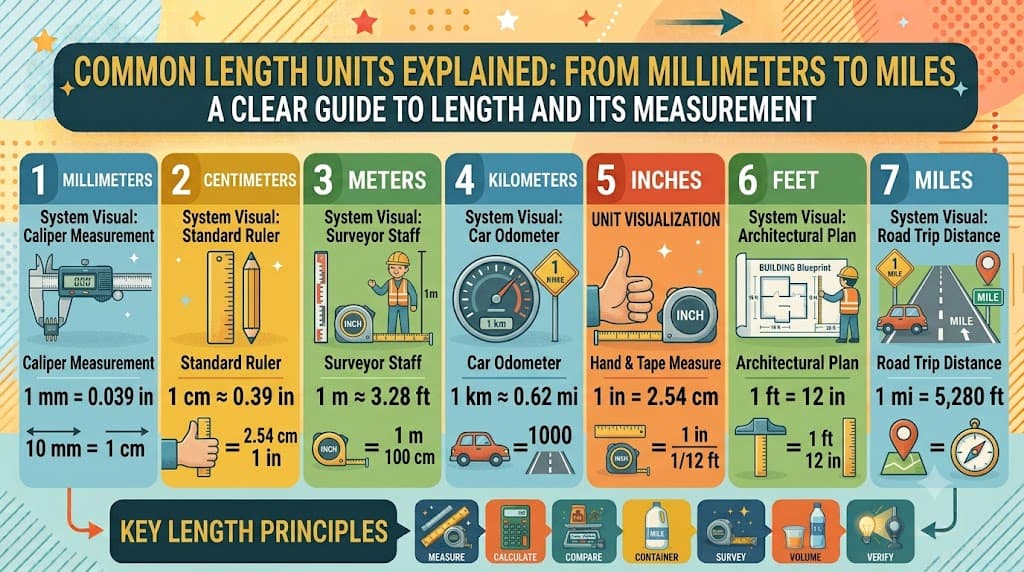
Common Length Units Explained: From Millimeters to Miles – Complete Guide
Length is one of the most fundamental measurements in our daily lives. From the tiny components in your smartphone to the distance between cities, length units help us understand and describe the world around us.
But with so many different units — millimeters, centimeters, meters, kilometers, inches, feet, yards, and miles — it can be confusing to know which one to use and how to convert between them.
In this comprehensive guide, we'll explain every common length unit, from the smallest to the largest, with real-world examples and easy conversion formulas.
Try it now: Use our free length converter here
Length Units at a Glance
Metric Units
| Unit | Symbol | Value in Meters | Common Use |
|---|---|---|---|
| Millimeter | mm | 0.001 m | Small objects, engineering |
| Centimeter | cm | 0.01 m | Height, everyday objects |
| Decimeter | dm | 0.1 m | Scientific measurements |
| Meter | m | 1 m | Standard unit, everyday |
| Kilometer | km | 1,000 m | Road distances, running |
Imperial / US Customary Units
| Unit | Symbol | Value in Feet | Value in Meters | Common Use |
|---|---|---|---|---|
| Inch | in | 1/12 ft | 0.0254 m | Small items, screens |
| Foot | ft | 1 ft | 0.3048 m | Height, room size |
| Yard | yd | 3 ft | 0.9144 m | Sports, fabric |
| Mile | mi | 5,280 ft | 1,609.34 m | Road distances |
Specialized Units
| Unit | Symbol | Value in Meters | Common Use |
|---|---|---|---|
| Angstrom | Å | 10⁻¹⁰ m | Atomic scale |
| Nanometer | nm | 10⁻⁹ m | Semiconductors, wavelengths |
| Micrometer | μm | 10⁻⁶ m | Cells, mechanical parts |
| Nautical Mile | nmi | 1,852 m | Aviation, maritime |
Understanding Each Length Unit
1. Millimeter (mm) — 0.001 meters
The millimeter is the smallest common metric unit for everyday use. It's about the thickness of a credit card.
Real-World Examples:
- Thickness of a credit card: ~0.76 mm
- Diameter of a pencil lead: ~0.5 mm
- Thickness of a dime: ~1.35 mm
- Small screws and electronic components
What's Smaller?
- Micrometer (μm) = 0.001 mm
- Nanometer (nm) = 0.000001 mm
2. Centimeter (cm) — 0.01 meters
The centimeter is one of the most common metric units. It's about the width of a fingernail.
Real-World Examples:
- Width of a fingernail: ~1 cm
- Size of a large paperclip: ~3 cm
- Height of a coffee mug: ~10 cm
- Smartphone width: ~7-8 cm
Key Conversion: 1 cm = 10 mm
3. Meter (m) — 1 meter
The meter is the base unit of length in the metric system. It's slightly longer than a yard.
Real-World Examples:
- Height of a door handle: ~1 m
- Length of a baseball bat: ~1 m
- Height of an average 3-year-old: ~1 m
- A person's stride: ~0.75 m
Key Conversions:
- 1 m = 100 cm = 1,000 mm
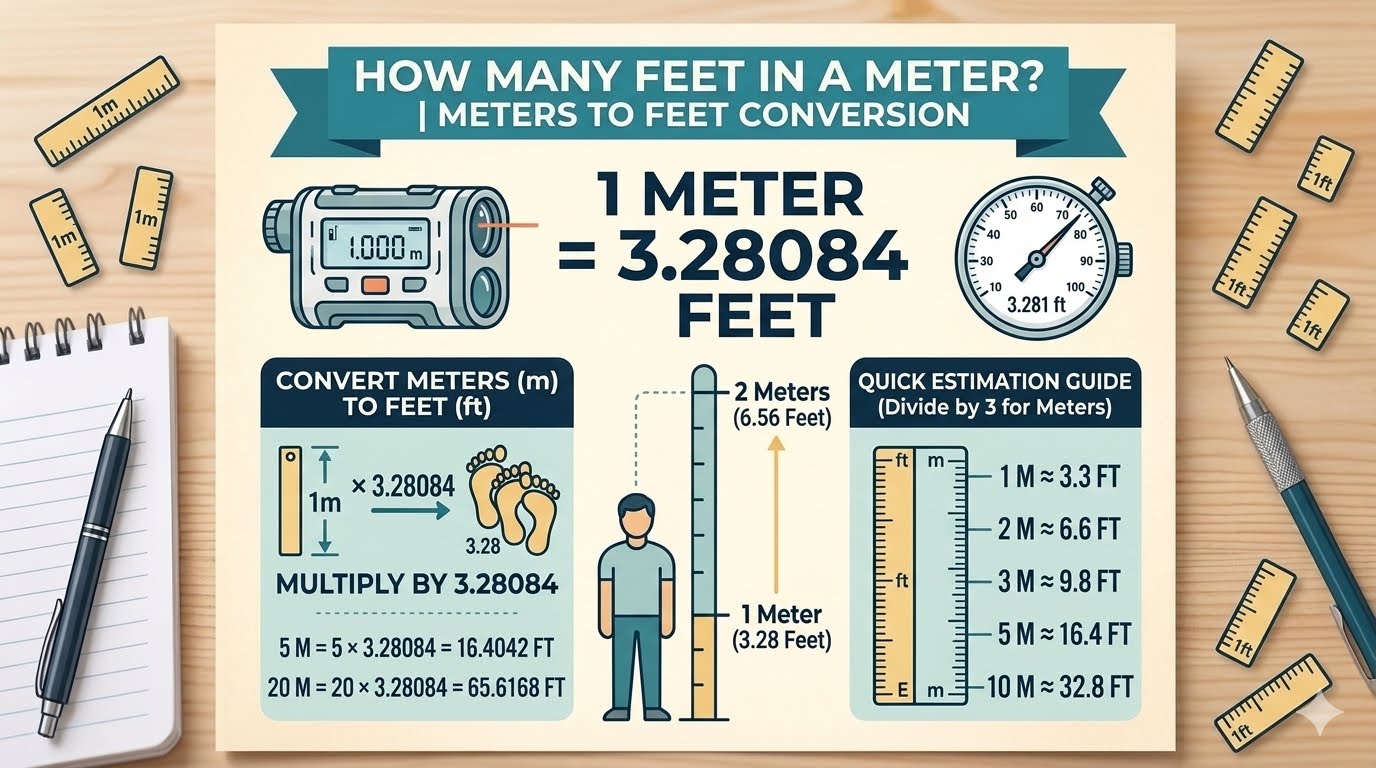
- 1 m ≈ 3.28 ft ≈ 1.09 yd
4. Kilometer (km) — 1,000 meters
The kilometer is used for measuring longer distances. It's about a 10-15 minute walk.
Real-World Examples:
- A 5K race: 5 km
- A 10K race: 10 km
- A marathon: 42.195 km
- Distance between nearby cities
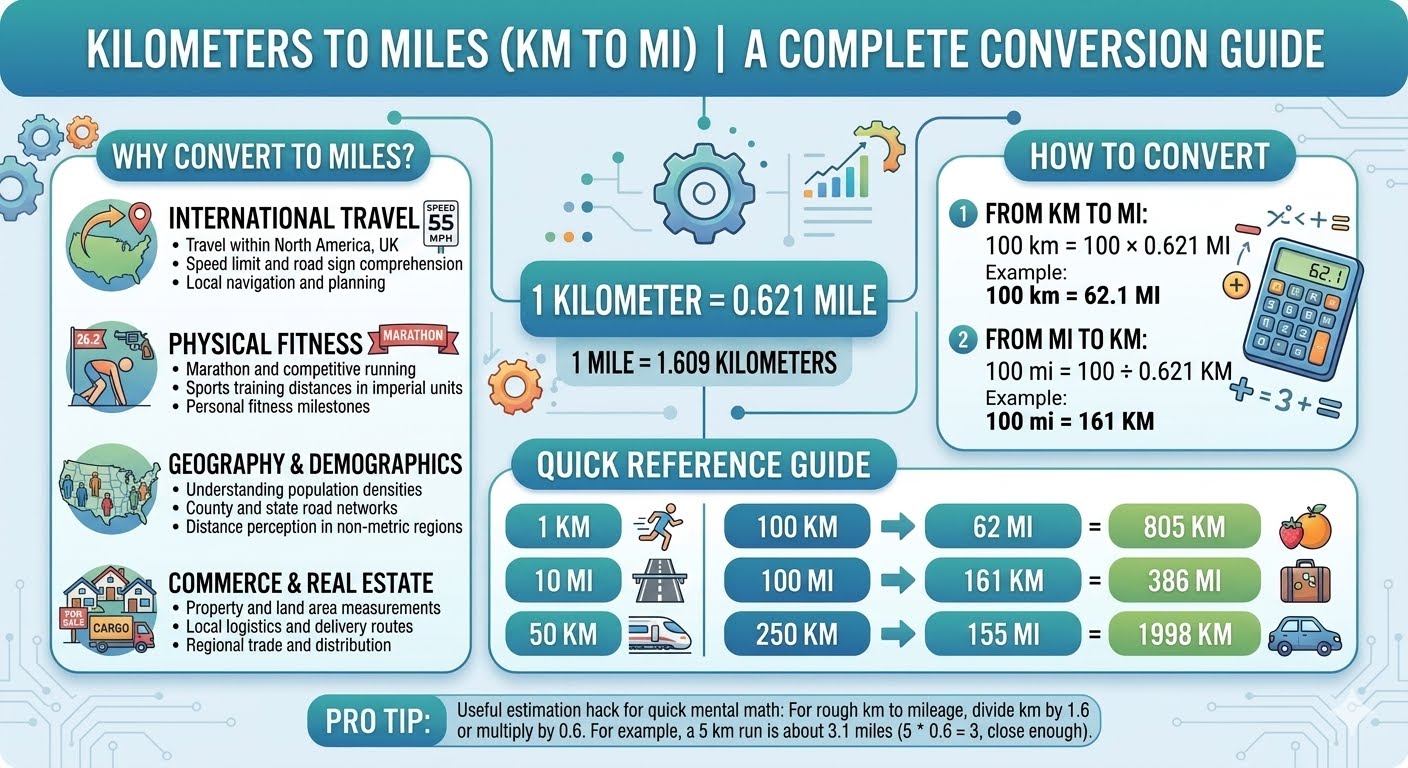
Key Conversion: 1 km ≈ 0.62 miles
5. Inch (in) — 0.0254 meters
The inch is one of the most common imperial units. It's about the length of the top joint of your thumb.
Real-World Examples:
- Width of a smartphone: ~3 inches
- Size of a TV screen: measured in inches diagonally
- Standard paper size: 8.5 × 11 inches
- Small furniture dimensions
Key Conversions:
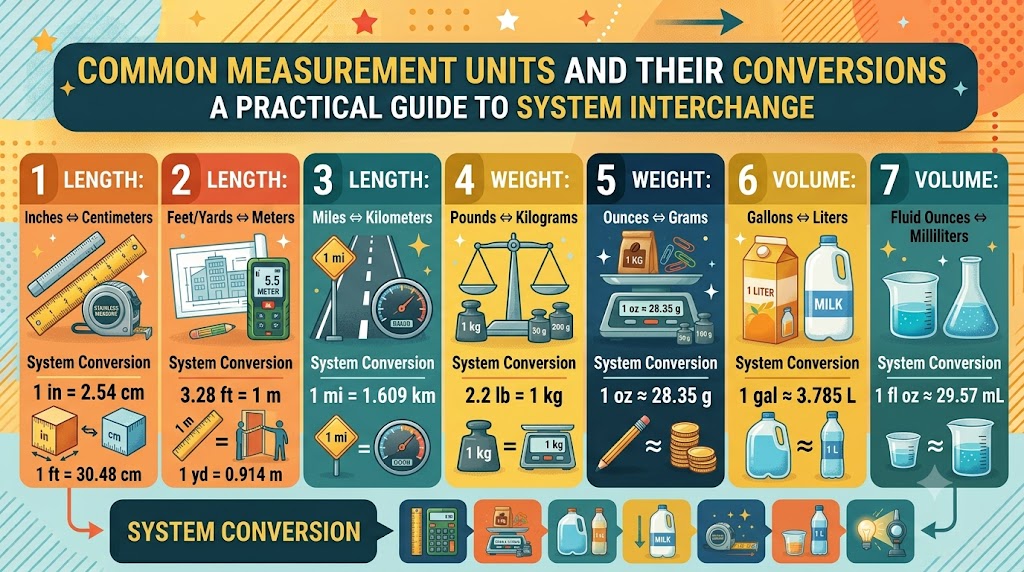
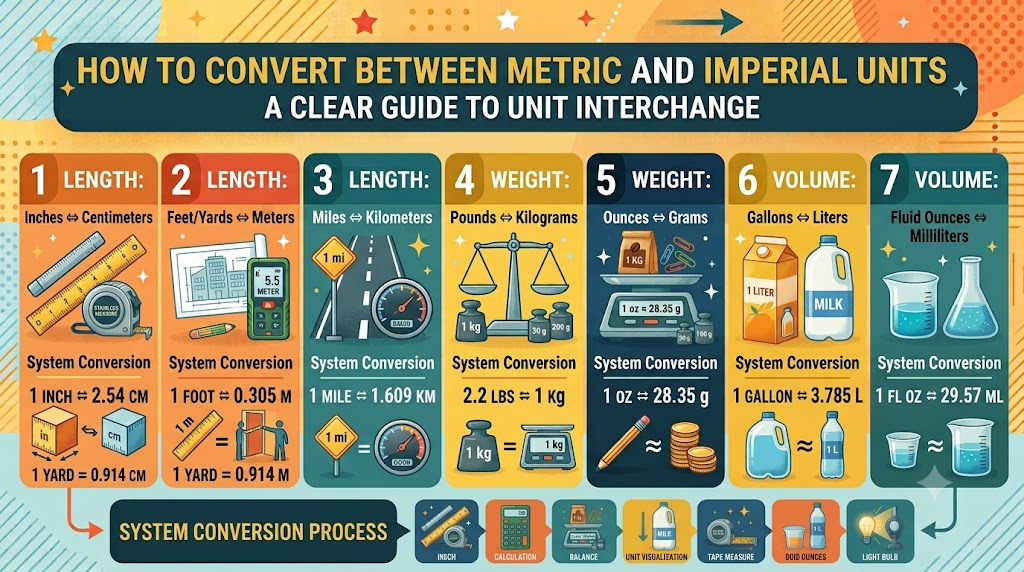
- 1 in = 2.54 cm exactly
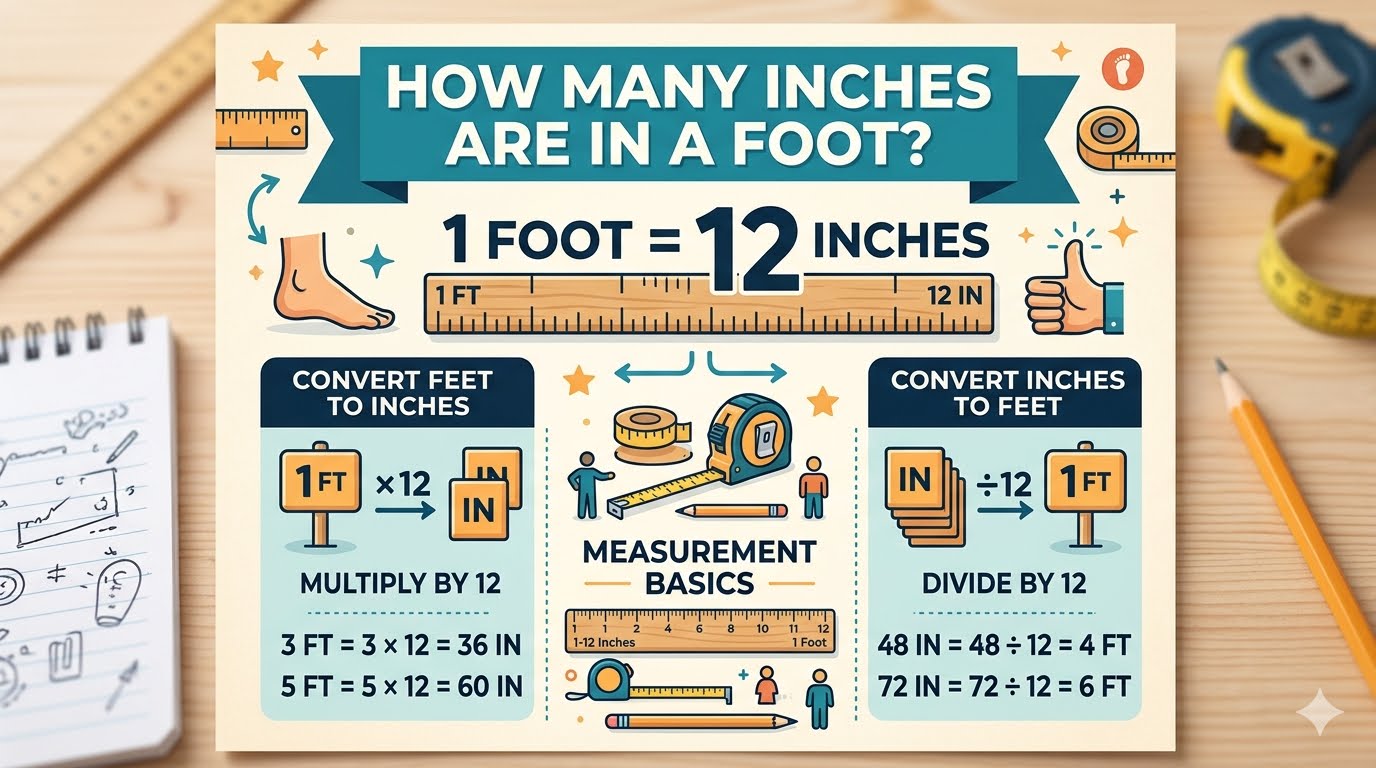
- 1 ft = 12 in
6. Foot (ft) — 0.3048 meters
The foot is a common imperial unit for height and room dimensions. It's about the length of an adult foot.
Real-World Examples:
- Height of a person: 5-6 ft
- Standard ceiling height: 8 ft
- A football field: 100 yards = 300 ft
- Room dimensions: 10 ft × 12 ft
Key Conversions:
- 1 ft = 12 in = 30.48 cm
- 1 ft ≈ 0.305 m
7. Yard (yd) — 0.9144 meters
The yard is used in sports and fabric measurements. It's about the length of a baseball bat.
Real-World Examples:
- A football field: 100 yards
- Fabric sold by the yard
- Golf course distances
- Baseball base paths: 90 feet = 30 yards
Key Conversions:
- 1 yd = 3 ft = 36 in
- 1 yd ≈ 0.914 m
8. Mile (mi) — 1,609.34 meters
The mile is used for measuring longer distances on roads and in running.
Real-World Examples:
- A 5-mile run
- A 10-mile commute
- Distance between cities
- A marathon: 26.2 miles
Key Conversions:
- 1 mi = 5,280 ft = 1,760 yd
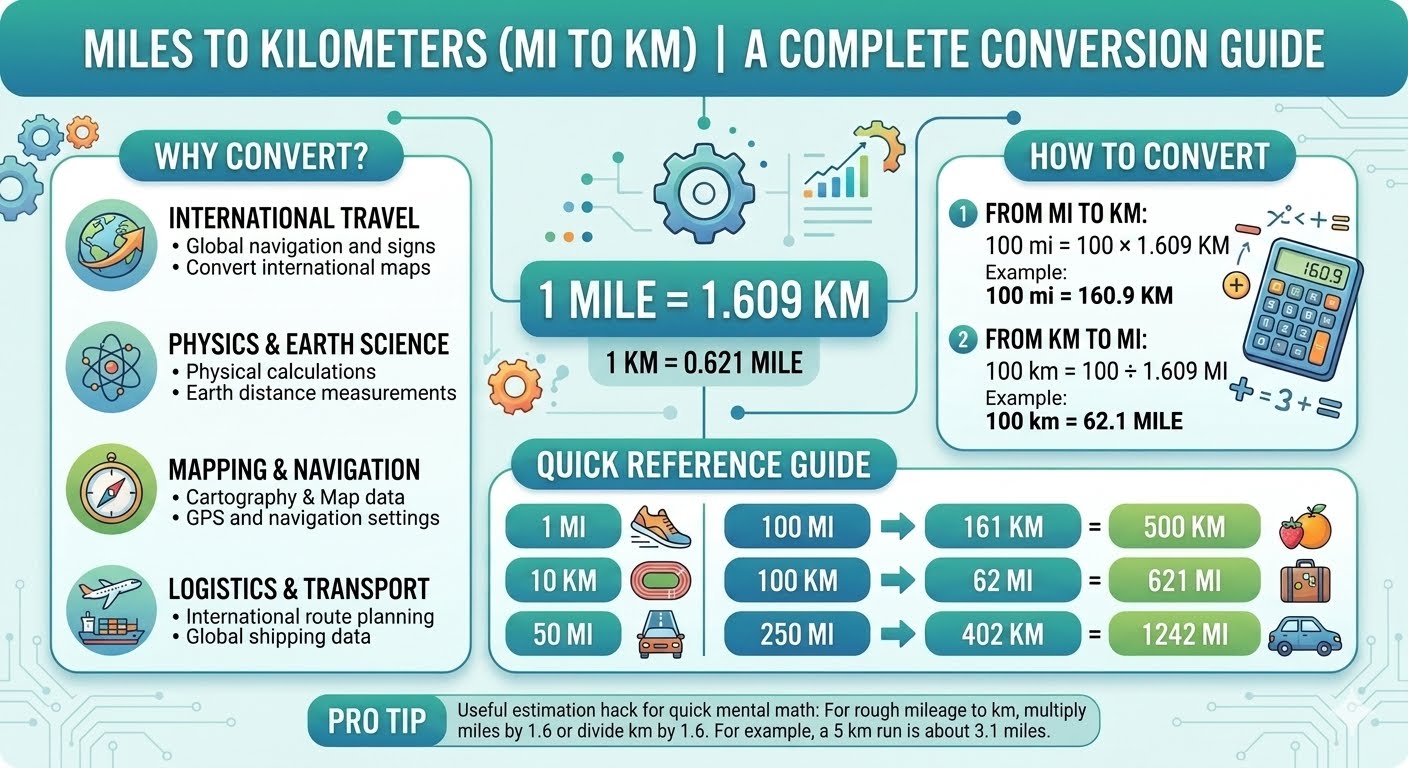
- 1 mi ≈ 1.609 km
Visual Size Comparison
┌─────────────────────────────────────────────────────────────────────────┐
│                    LENGTH SCALE COMPARISON                              │
├─────────────────────────────────────────────────────────────────────────┤
│                                                                         │
│   Atoms ──► Cells ──► Fingernail ──► Human ──► Building ──► City      │
│                                                                         │
│   ────► ────► ────► ────► ────► ────► ────► ────► ────► ────►        │
│                                                                         │
│   1 nm   1 μm   1 mm   1 cm   1 dm   1 m   1 dam   1 hm   1 km         │
│                                                                         │
│   ────► ────► ────► ────► ────► ────► ────► ────►                     │
│                                                                         │
│   1 in   1 ft   1 yd   1 mi                                             │
│                                                                         │
│   Common References:                                                    │
│   ─────────────────────────────────────────────────────────────────     │
│   1 mm ≈ Thickness of a credit card                                     │
│   1 cm ≈ Width of a fingernail                                          │
│   1 m ≈ Height of a door handle                                         │
│   1 km ≈ 10-15 minute walk                                              │
│   1 in ≈ Length of a thumb joint                                        │
│   1 ft ≈ Length of an adult foot                                        │
│   1 yd ≈ Length of a baseball bat                                       │
│   1 mi ≈ 15-20 minute walk                                              │
│                                                                         │
└─────────────────────────────────────────────────────────────────────────┘
Complete Conversion Tables
Metric to Metric
| From | To | Multiply By | Example |
|---|---|---|---|
| km | m | 1,000 | 5 km = 5,000 m |
| m | cm | 100 | 5 m = 500 cm |
| m | mm | 1,000 | 5 m = 5,000 mm |
| cm | mm | 10 | 5 cm = 50 mm |
| m | km | 0.001 | 500 m = 0.5 km |
| cm | m | 0.01 | 500 cm = 5 m |
| mm | m | 0.001 | 5,000 mm = 5 m |
Imperial to Imperial
| From | To | Multiply By | Example |
|---|---|---|---|
| mi | ft | 5,280 | 2 mi = 10,560 ft |
| mi | yd | 1,760 | 2 mi = 3,520 yd |
| yd | ft | 3 | 5 yd = 15 ft |
| ft | in | 12 | 5 ft = 60 in |
| yd | in | 36 | 5 yd = 180 in |
| ft | mi | 0.000189 | 5,280 ft = 1 mi |
| in | ft | 0.0833 | 12 in = 1 ft |
Metric ↔ Imperial
| From | To | Multiply By | Example |
|---|---|---|---|
| km | mi | 0.621371 | 10 km = 6.21 mi |
| mi | km | 1.60934 | 10 mi = 16.09 km |
| m | ft | 3.28084 | 10 m = 32.81 ft |
| ft | m | 0.3048 | 10 ft = 3.05 m |
| m | yd | 1.09361 | 10 m = 10.94 yd |
| yd | m | 0.9144 | 10 yd = 9.14 m |
| cm | in | 0.393701 | 10 cm = 3.94 in |
| in | cm | 2.54 | 10 in = 25.4 cm |
| mm | in | 0.039370 | 10 mm = 0.39 in |
| in | mm | 25.4 | 10 in = 254 mm |
Real-World Examples by Unit
Using Millimeters (mm)
| Object | Size |
|---|---|
| Credit card thickness | ~0.76 mm |
| Pencil lead diameter | 0.5-0.7 mm |
| Paper thickness | ~0.1 mm |
| Human hair diameter | ~0.06 mm |
Using Centimeters (cm)
| Object | Size |
|---|---|
| Fingernail width | ~1 cm |
| Smartphone width | ~7 cm |
| Coffee mug height | ~10 cm |
| Standard book | ~20 cm |
Using Meters (m)
| Object | Size |
|---|---|
| Door height | ~2 m |
| Room height | ~2.5 m |
| Car length | ~4.5 m |
| Bus length | ~12 m |
Using Kilometers (km)
| Distance | Size |
|---|---|
| 5K race | 5 km |
| 10K race | 10 km |
| Marathon | 42.195 km |
| City to city | 50-500 km |
Using Inches (in)
| Object | Size |
|---|---|
| Smartphone screen | 5-7 in |
| Laptop screen | 13-17 in |
| TV screen | 32-85 in |
| Standard ruler | 12 in |
Using Feet (ft)
| Object | Size |
|---|---|
| Person height | 5-6 ft |
| Ceiling height | 8 ft |
| Room width | 10-15 ft |
| Car length | ~15 ft |
Using Yards (yd)
| Object | Size |
|---|---|
| Football field | 100 yd |
| Golf fairway | 50-300 yd |
| Fabric bolt | 10-50 yd |
| Swimming pool (25 yd) | 25 yd |
Using Miles (mi)
| Distance | Size |
|---|---|
| 5K race | 3.1 mi |
| 10K race | 6.2 mi |
| Half marathon | 13.1 mi |
| Marathon | 26.2 mi |
| Daily commute | 5-30 mi |
Step-by-Step Conversion Examples
Example 1: Convert 10 Inches to Centimeters
Problem: How many centimeters are in 10 inches?
Step 1: Use the formula
cm = in × 2.54
Step 2: Substitute
cm = 10 × 2.54
Step 3: Calculate
cm = 25.4 cm
Answer: 10 inches = 25.4 cm
Example 2: Convert 5 Miles to Kilometers
Problem: How many kilometers are in 5 miles?
Step 1: Use the formula
km = mi × 1.60934
Step 2: Substitute
km = 5 × 1.60934
Step 3: Calculate
km = 8.0467 km
Answer: 5 miles = 8.05 km
Example 3: Convert 100 cm to Meters
Problem: How many meters are in 100 centimeters?
Step 1: Use the formula
m = cm ÷ 100
Step 2: Calculate
m = 100 ÷ 100 = 1 m
Answer: 100 cm = 1 m
Example 4: Convert 2.5 km to Meters
Problem: How many meters are in 2.5 kilometers?
Step 1: Use the formula
m = km × 1,000
Step 2: Calculate
m = 2.5 × 1,000 = 2,500 m
Answer: 2.5 km = 2,500 m
Example 5: Convert 6 Feet to Inches
Problem: How many inches are in 6 feet?
Step 1: Use the formula
in = ft × 12
Step 2: Calculate
in = 6 × 12 = 72 in
Answer: 6 ft = 72 in
Specialized Length Units
Angstrom (Å)
- 1 Å = 10⁻¹⁰ m = 0.1 nm
- Used to measure atomic and molecular distances
- Named after Swedish physicist Anders Jonas Ångström
Examples:
- Diameter of a hydrogen atom: ~0.5 Å
- Distance between atoms in a molecule: 1-2 Å
Nanometer (nm)
- 1 nm = 10⁻⁹ m = 10 Å
- Used in semiconductor manufacturing, optics
Examples:
- Computer chip features: 5-7 nm
- Wavelength of visible light: 400-700 nm
- DNA diameter: ~2.5 nm
Micrometer (μm)
- 1 μm = 10⁻⁶ m = 1,000 nm
- Used for microscopic measurements, cells
Examples:
- Human hair diameter: 50-100 μm
- Bacteria size: 1-10 μm
- Red blood cell: ~7 μm
Nautical Mile (nmi)
- 1 nmi = 1,852 m = 1.15078 mi
- Used in aviation and maritime navigation
- Based on one minute of latitude
Examples:
- International waters: 12 nmi from shore
- Flight distances: measured in nautical miles
- Ship speed: measured in knots (nautical miles per hour)
Mental Math Shortcuts
Quick Estimates
| Exact Conversion | Quick Estimate | Error |
|---|---|---|
| 1 in = 2.54 cm | 1 in ≈ 2.5 cm | 1.6% |
| 1 m = 3.28 ft | 1 m ≈ 3.3 ft | 0.6% |
| 1 mi = 1.61 km | 1 mi ≈ 1.6 km | 0.6% |
| 1 km = 0.62 mi | 1 km ≈ 0.6 mi | 3.2% |
| 1 ft = 30.48 cm | 1 ft ≈ 30 cm | 1.6% |
| 1 yd = 0.914 m | 1 yd ≈ 0.9 m | 1.5% |
Quick Mental Tricks
Miles to Kilometers: × 1.6 (or × 8 ÷ 5)
- 50 mi × 1.6 = 80 km (exact: 80.47 km)
Kilometers to Miles: × 0.6 (or × 5 ÷ 8)
- 100 km × 0.6 = 60 mi (exact: 62.14 mi)
Meters to Feet: × 3.3
- 10 m × 3.3 = 33 ft (exact: 32.81 ft)
Inches to Centimeters: × 2.5
- 10 in × 2.5 = 25 cm (exact: 25.4 cm)
Common Mistakes in Length Conversion
Mistake 1: Forgetting to Square for Area
Mistake: Converting 1 ft² using 0.3048
Correct: 1 ft² = (0.3048)² m² = 0.0929 m²
Mistake 2: Confusing mm and cm
Mistake: Thinking 1 cm = 0.1 m
Correct: 1 cm = 0.01 m (100 cm = 1 m)
Mistake 3: Forgetting 12 Inches in a Foot
Mistake: Thinking there are 10 inches in a foot
Correct: 1 foot = 12 inches
Mistake 4: Forgetting 5,280 Feet in a Mile
Mistake: Thinking there are 5,000 feet in a mile
Correct: 1 mile = 5,280 feet
Mistake 5: Rounding Too Early
Mistake: Rounding intermediate values in multi-step conversions
Correct: Keep full precision until the final answer, then round
How to Use the Length Converter
- Select the category: Length
- Choose your input unit: e.g.,
mi(mile) orm(meter) - Choose your output unit: e.g.,
km(kilometer) orft(foot) - Enter the value: Type the number you want to convert
- Get the result: Instant, accurate conversion
Available Length Units
The converter supports all 19 length units:
| Category | Units |
|---|---|
| Metric | m, km, cm, mm, dm, dam, hm, Gm, Mm, μm, nm, pm, angstrom |
| Imperial | in, ft, yd, mi, nmi, rod |
Frequently Asked Questions
Q: How many millimeters are in a meter?
1 m = 1,000 mm
Q: How many centimeters are in a meter?
1 m = 100 cm
Q: How many inches are in a foot?
1 ft = 12 in
Q: How many feet are in a mile?
1 mi = 5,280 ft
Q: How many kilometers are in a mile?
1 mi = 1.60934 km
Q: How many miles are in a kilometer?
1 km = 0.621371 mi
Q: How many feet are in a meter?
1 m = 3.28084 ft
Q: How many inches are in a centimeter?
1 cm = 0.393701 in
Q: What is the difference between a nautical mile and a regular mile?
A nautical mile (1,852 m) is based on one minute of latitude. A regular (statute) mile is 1,609.34 m.
Q: Which countries use miles instead of kilometers?
The US, UK (some road signs), and a few others use miles. Most countries use kilometers.
Try the Length Converter
Ready to convert length units? Use our free length converter at:
https://www.easyconvertunits.com/length
It supports all 19 length units with instant, accurate conversions and a clean, easy-to-use interface.
Final Thoughts
Understanding length units is essential for everyday life, from measuring your height to planning a road trip. Whether you're using metric or imperial units, knowing how to convert between them helps you communicate and understand measurements across different systems.
Key takeaways:
- Metric units are decimal-based — easy conversions (powers of 10)
- Imperial units have inconsistent factors — memorize the key ones (12, 3, 5,280)
- Start with common units — mm, cm, m, km, in, ft, yd, mi
- Use a converter tool for precision and speed
Remember: The length stays the same — only the unit changes. 1 meter is still 1 meter, whether you call it 3.28 feet or 100 centimeters!
Tags: length units, millimeters to miles, metric length units, imperial length units, length conversion, measurement guide, distance units, unit conversion, meters to feet, inches to cm, miles to km, measurement tips, length measurement, everyday length units, common length units, length unit guide, convert length, length measurement explained, millimeter, centimeter, meter, kilometer, inch, foot, yard, mile, angstrom, nanometer, micrometer